
By Jenn Resendiz
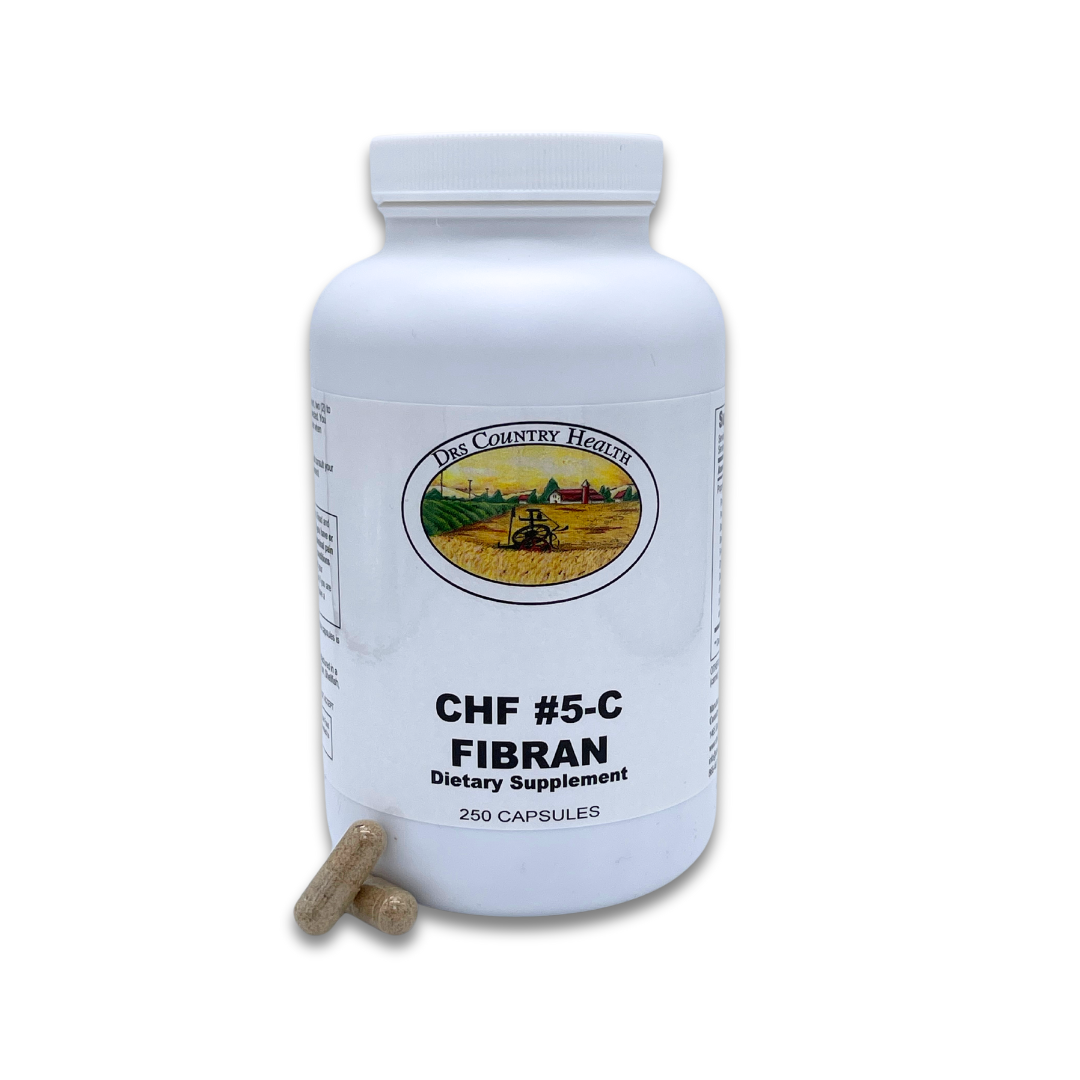
If you like the idea of a fiber supplement but not the gritty drink, capsules are an easy alternative. CHF #5C Fiber Plus 250 Capsules (labeled “Fibran” on the formula sheet) combines proven fibers with time-honored herbs. Here is what research says about each key ingredient.
Full ingredient list (per 8 capsules, 5.1 g proprietary blend): psyllium (Plantago ovata) husk, flax seed, apple pectin, papain, licorice (Glycyrrhiza glabra) root extract, slippery elm bark, trace mineral complex, alfalfa extract, bayberry bark extract, corn silk, fennel seed, kelp (Ascophyllum nodosum), milk thistle seed extract, Chinese rhubarb (Rheum palmatum) root extract, uva ursi leaf, dandelion root extract, clove bud, ginger root extract, Echinacea purpurea root extract, butcher’s broom extract, aloe leaf extract, and a 1 billion CFU probiotic blend (Bacillus coagulans, B. subtilis, B. clausii). Other ingredients: magnesium stearate, silica, gelatin (capsule). The label suggests 2 to 8 capsules in the evening with at least 8 ounces of water.
Psyllium works the same way in a capsule as in a powder. MedlinePlus explains that this bulk-forming fiber absorbs liquid in the intestines, swells, and forms a soft, bulky stool that is easier to pass, which is why a full glass of water with each dose matters. A 2022 meta-analysis of 16 randomized trials found that fiber supplements helped two-thirds of adults with chronic constipation, and psyllium was one of the most effective fibers studied.
Capsules make psyllium easy to take anywhere, and the flexible 2-to-8-capsule range lets you start low and build up gradually, just as Mayo Clinic recommends when adding fiber. Mayo Clinic notes that whole, fiber-rich foods are generally the first choice, and a fiber supplement can help fill the gap when diet changes alone don’t add enough fiber.
Pectin is a soluble fiber found in apples and other fruits. In the 2022 meta-analysis, pectin was one of only two fiber types, along with psyllium, that significantly improved both treatment response and stool frequency in adults with chronic constipation. Mayo Clinic notes that soluble fibers found in foods such as apples can also help lower cholesterol and support healthy blood sugar levels.
Licorice root has one of the longest histories of any herb. NCCIH notes that it was used in ancient Assyrian, Egyptian, Greek, Chinese, and Indian traditions, and today it is promoted for digestive and respiratory support. It is also widely used as a flavoring in foods and candy. In CHF #5C, licorice root extract is one of several traditional herbs chosen to complement the fibers.
Uva ursi, also called bearberry, has leaves that contain a natural compound called arbutin. It has a long history of traditional use for urinary tract support. The European Medicines Agency’s herbal medicines committee recognizes bearberry leaf on the basis of this long-standing use and notes that it is meant for short-term use, no longer than one week at a time.
Milk thistle seed contains silymarin and has traditionally been used for the liver. NCCIH reports that small studies suggest milk thistle extracts may help support healthy blood sugar in people with type 2 diabetes, and that it appears well tolerated. Ginger has been studied extensively in people. NCCIH says research shows it may help with nausea and vomiting during pregnancy and may reduce the severity of menstrual cramps, and that it has been used safely in many studies. The formula also includes Chinese rhubarb and aloe, traditional botanical laxatives, and 1 billion CFU of Bacillus probiotics.
CHF #5C combines bulk-forming fiber (psyllium, flax, and pectin) with traditional digestive herbs, plus small amounts of rhubarb and aloe to encourage the bowel’s natural rhythm. Taking the capsules in the evening with a full glass of water makes it easy to fit into a routine, and the adjustable dose lets you find the amount that works for you.
Who might enjoy it: adults with occasional constipation who prefer capsules to powder, travelers, and anyone who wants a convenient way to add fiber and traditional digestive herbs to their day.
Please check with your clinician first if you:
Always drink at least 8 ounces of water with the capsules, and stop if diarrhea or abdominal pain occurs, as the label directs.
Both are Fiber Plus formulas. #5C comes in capsules and includes licorice root extract; the #5P powder also includes guar gum, burdock, and wormwood.
The label suggests 2 to 8 capsules in the evening with at least 8 ounces of water. Starting low and increasing gradually helps your body adjust.
Yes. Psyllium works the same way in either form, absorbing water to form a soft, bulky stool.
Ginger has been widely studied. Research suggests it may help with nausea, and it has been used safely in many studies.
Add CHF #5C Fiber Plus capsules to your cart or view the full product page and label.
This article is for general education only. It is not medical advice, and neither this article nor the product it discusses is meant to diagnose, treat, cure, or prevent any disease. Statements about dietary supplements have not been evaluated by the Food and Drug Administration. Talk with your doctor, pharmacist, or another qualified health professional before starting any supplement, especially if you are pregnant or breastfeeding, take prescription or over-the-counter medicines, or have a medical condition.