
By Jenn Resendiz
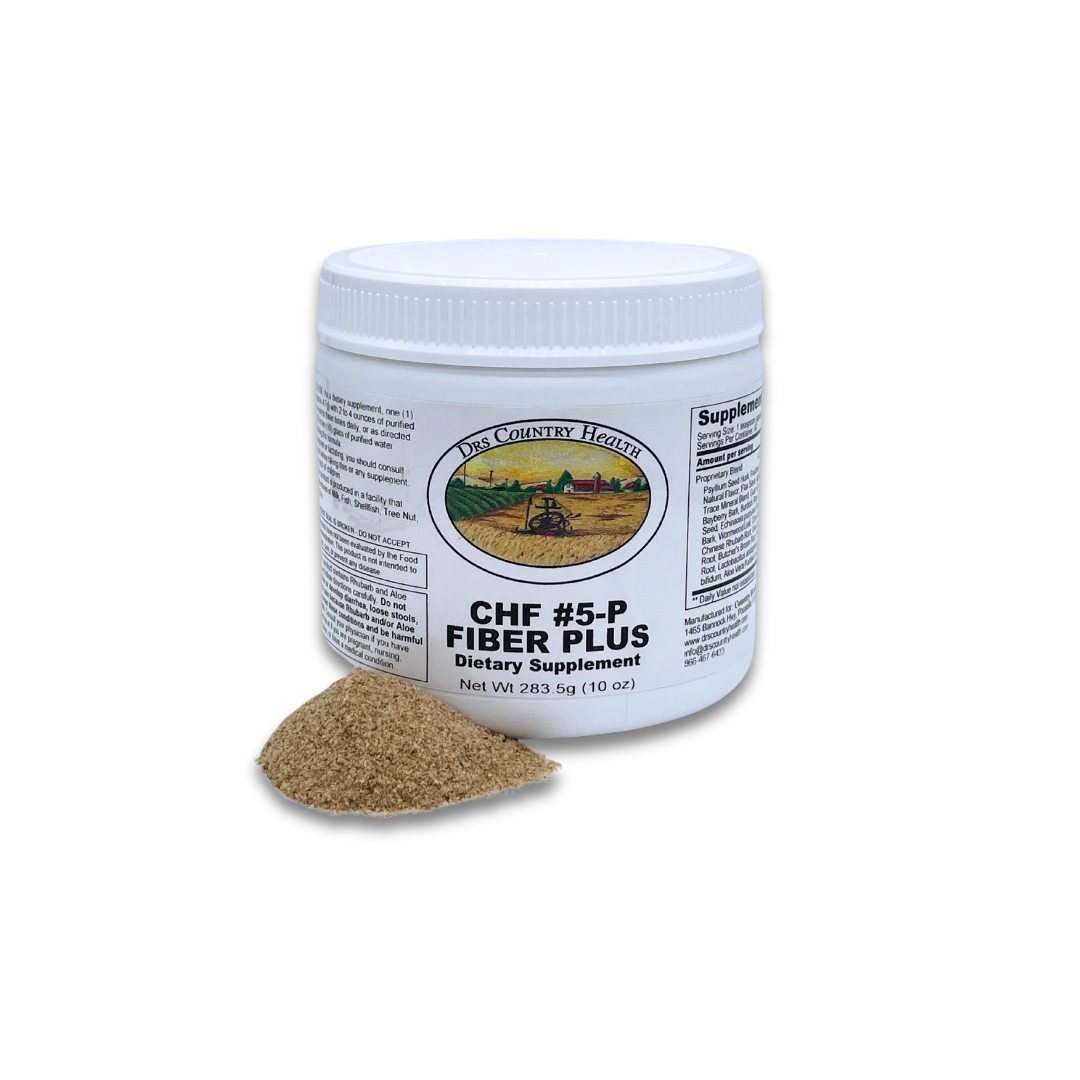
Fiber is one of the simplest, best-supported ways to keep digestion moving. CHF #5P Fiber Plus is the powder version of Country Health’s Fiber Plus formula, combining several well-studied fibers with traditional herbs. Here is what research says about its key ingredients.
Full ingredient list (per 1 teaspoon, about 4.7 g proprietary blend): psyllium seed husk, flax seed, apple pectin, papain, trace mineral blend, guar gum, alfalfa leaf, bayberry bark, burdock root, kelp, milk thistle seed, Echinacea purpurea root, slippery elm bark, wormwood leaf, corn silk, licorice root, Chinese rhubarb root, uva ursi leaf, dandelion root, butcher’s broom root, fennel seed, ginger root, probiotic blend (Bacillus coagulans, Bacillus subtilis, Bacillus clausii, 1 billion CFU), aloe vera purified leaf, and clove bud. The label suggests one teaspoon in water or juice one to three times daily, plus 8 to 10 glasses of water a day.
Psyllium is the husk of the psyllium seed and one of the most trusted fibers available. MedlinePlus explains that it absorbs liquid in the intestines, swells, and forms a soft, bulky stool that is easier to pass. Mayo Clinic lists psyllium among soluble fibers, the kind that forms a gel and can help lower cholesterol and blood sugar.
The research is strong. A 2022 meta-analysis of 16 randomized trials in adults with chronic constipation found that 66% of people responded to fiber supplements, compared with 41% on control, and psyllium was singled out as especially effective, with the best results after about 4 weeks of regular use. A systematic review published in the journal of the American College of Gastroenterology also rated psyllium as supported by moderate-quality evidence (grade B).
Flaxseed has been valued for thousands of years. NCCIH notes that it was used to make laxatives in ancient Greece and stews in Ethiopia. Flaxseed provides fiber, including a gel-forming mucilage, plus ALA, the plant omega-3 fatty acid. NCCIH reports that limited amounts of flaxseed appear safe for use up to 6 months and that one clinical trial suggests flaxseed mucilage powder mixed with water might support weight loss in adults with overweight.
Pectin is a soluble fiber found in apples and other fruits. In the same 2022 meta-analysis, pectin was one of the two fiber types (along with psyllium) that significantly improved both response to treatment and stool frequency in adults with chronic constipation. Mayo Clinic notes that soluble fibers found in apples and similar foods can help lower cholesterol and support healthy blood sugar.
Guar gum is a soluble fiber from the guar bean. A 2003 review of partially hydrolyzed guar gum, a processed form, found it reduced laxative use in a nursing home population, eased symptoms of irritable bowel syndrome, and increased beneficial Bifidobacterium in the gut. Like other fermentable fibers, it serves as food for gut bacteria. Mayo Clinic notes that this kind of fermented fiber may play a role in supporting colon health.
Chinese rhubarb root and aloe leaf are classic botanical laxatives. A 2015 review of herbal remedies for constipation lists rhubarb and aloe, along with senna and cascara, among the most commonly used botanical laxatives. The NIH LactMed database explains that rhubarb root contains anthraquinones, natural compounds that stimulate the bowel, along with astringent tannins. Mayo Clinic describes how stimulant ingredients trigger rhythmic contractions of the intestinal muscles to help move stool along.
The rest of the formula adds traditional digestive herbs such as ginger, fennel, slippery elm, and dandelion, plus 1 billion CFU of spore-forming Bacillus probiotics.
CHF #5P pairs bulk-forming fibers (psyllium, flax, pectin, and guar) with gentle botanical stimulants (rhubarb and aloe). The fibers soften and add bulk to stool, while the herbs encourage the bowel’s natural movement. Mayo Clinic notes that fiber also helps with bowel health, healthy cholesterol and blood sugar, and feeling full, benefits that go beyond regularity.
How to use it: MedlinePlus recommends mixing psyllium powder with a full 8-ounce glass of liquid and drinking it right away, and Mayo Clinic suggests increasing fiber gradually over a few weeks so your digestive system can adjust.
Who might enjoy it: adults looking for a powdered fiber blend for occasional constipation, and people who struggle to reach the 21 to 38 grams of fiber a day recommended for adults.
Please check with your clinician first if you:
Avoid breathing in the powder while mixing. The blend also contains wormwood, a bitter herb that contains thujone, which is another reason to use it as directed. MedlinePlus advises not using psyllium for more than a week without talking to your doctor.
#5P is the powder form of Fiber Plus and also contains guar gum, burdock, and wormwood. #5C is the capsule form with a somewhat different herb list.
MedlinePlus recommends mixing psyllium powder with at least 8 ounces of liquid, plus plenty of water through the day.
In research, fiber supplements showed their clearest benefits after about 4 weeks of regular use.
Yes. Each teaspoon includes 1 billion CFU of Bacillus coagulans, Bacillus subtilis, and Bacillus clausii.
Add CHF #5P Fiber Plus powder to your cart or view the full product page and label.
This article is for general education only. It is not medical advice, and neither this article nor the product it discusses is meant to diagnose, treat, cure, or prevent any disease. Statements about dietary supplements have not been evaluated by the Food and Drug Administration. Talk with your doctor, pharmacist, or another qualified health professional before starting any supplement, especially if you are pregnant or breastfeeding, take prescription or over-the-counter medicines, or have a medical condition.