
By Jenn Resendiz
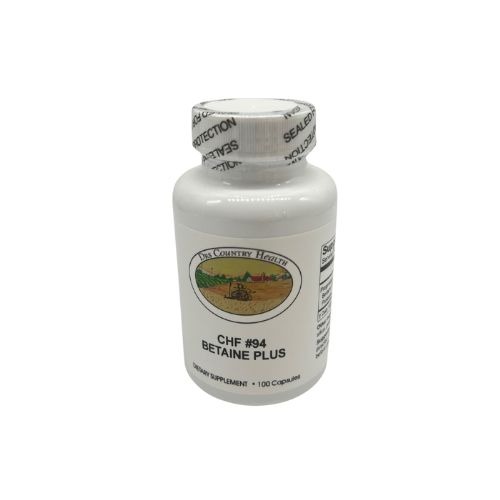
Comfortable digestion starts with the right chemistry in the stomach and a helpful mix of enzymes. This article walks through the ingredients in CHF #94 Betaine Plus 100 Capsules and how they are commonly used for mealtime support.
Full ingredient list (per serving): Proprietary blend 456 mg containing betaine HCL, peptidase, papain, beet root, licorice root, rhubarb root, protease, amylase, cellulose, lactase, lipase, and apple pectin. Other ingredients: microcrystalline cellulose, magnesium stearate, silica, and a gelatin capsule. The label suggests one capsule daily, or as directed. If you are pregnant or lactating, consult your physician before use.
Betaine hydrochloride is a supplemental form of betaine bound to hydrochloric acid. In the stomach’s watery environment it can separate and contribute acid, which is why integrative clinicians have long used betaine HCL capsules with protein-containing meals for people who want extra gastric acidity support. (This is different from non-acidic betaine / trimethylglycine used for methylation support.)
CHF #94 places betaine HCL at the front of a 456 mg digestive blend so it works alongside enzymes rather than as a standalone megadose.
Digestive enzymes help break foods into absorbable pieces:
Together they mirror the enzyme categories your own digestive tract uses when you enjoy a mixed meal.
Beet root is a traditional digestive botanical and a natural source of betaine (trimethylglycine) in foods. Licorice root and rhubarb root appear in many classic herbal digestive blends. Apple pectin is a soluble fiber fraction from apples that people often use for gentle gut comfort. These botanicals round out the enzyme-and-acid core of CHF #94.
As we age, natural production of stomach acid and digestive enzymes can vary from person to person. A formula that combines betaine HCL with protease, amylase, lipase, lactase, and papain gives you several tools in one capsule for mixed meals that include protein, starch, fat, and dairy. Apple pectin and the root botanicals add a gentle plant backdrop. Always match use to your clinician’s guidance if you have a sensitive stomach.
CHF #94 combines betaine HCL with a multi-enzyme spectrum and soothing plant companions in one daily capsule. The design suits mealtime routines where you want both acidity support and enzyme diversity.
Who might enjoy it: adults seeking a Country Health digestive capsule with betaine HCL, people who want plant enzymes such as papain alongside protease/amylase/lipase/lactase, and anyone following a simple one-capsule daily label.
Food sources of naturally occurring digestive helpers include papaya (papain) and pineapple (bromelain, not in this formula), while your pancreas and brush-border enzymes handle most everyday digestion. Supplemental enzymes are popular when someone wants extra mealtime support. CHF #94 keeps the routine simple at one capsule daily unless your clinician suggests otherwise.
Because betaine HCL increases stomach acidity, please check with your clinician first if you:
A 456 mg proprietary blend of betaine HCL with peptidase, papain, beet root, licorice root, rhubarb root, protease, amylase, cellulose, lactase, lipase, and apple pectin.
Many people take digestive formulas with a meal. Follow the label (one capsule daily) or your clinician’s directions.
No. Betaine HCL is used for gastric acidity support; non-acidic betaine (TMG) is used mainly as a methyl donor.
Often yes, but ask your clinician how to time products in your personal routine.
Add CHF #94 Betaine Plus to your cart or view the full product page and label.
This article is for general education only. It is not medical advice, and neither this article nor the product it discusses is meant to diagnose, treat, cure, or prevent any disease. Statements about dietary supplements have not been evaluated by the Food and Drug Administration. Talk with your doctor, pharmacist, or another qualified health professional before starting any supplement, especially if you are pregnant or breastfeeding, take prescription or over-the-counter medicines, or have a medical condition.