
By Jenn Resendiz
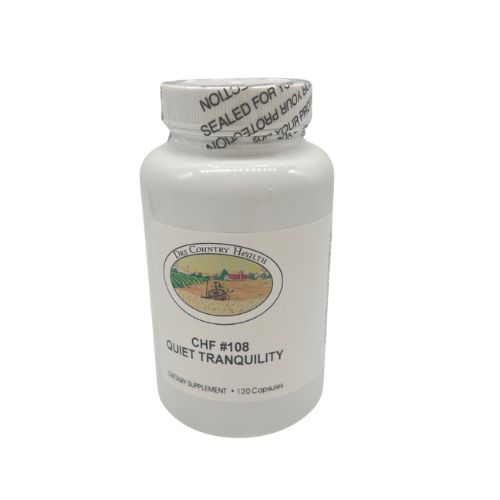
Calm evenings and steadier days often start with botanicals that have a long tradition of gentle nervous-system support. This article walks through the featured ingredients in CHF #108 Quiet Tranquility and what NCCIH and clinical sources report about them.
Full ingredient list: A proprietary blend 1500 mg of concentrated extracts of Passiflora incarnata (passionflower), Crataegus oxycantha (hawthorne) berry, Melissa officinalis (lemon balm) leaf, Eschscholzia californica (California poppy) flower, Melilotus officinalis (yellow sweet clover), inositol, Lavandula angustifolia (lavender) flower oil, Citrus aurantium amara (petitgrain) leaf oil, and Citrus aurantium bergamia (bergamot) fruit oil. Other ingredients: trace mineral complex from sea water and a gelatin capsule. The label suggests 2 capsules 2–3 times daily, or as directed by a qualified health professional. Supplied in a 120-capsule bottle.
NCCIH explains that passionflower is a climbing vine traditionally used as a calming herb. Today it is promoted for occasional anxiety, stress, and sleep support. A small amount of research suggests oral passionflower may help reduce symptoms of anxiety—including anxiety before a surgical or dental procedure—and may improve total sleep time in adults with insomnia, though effects on how quickly people fall asleep can vary by study.
In CHF #108, passionflower leads the botanical list inside the 1500 mg concentrated-extract blend, setting a calm-first tone for the formula.
Lemon balm (Melissa officinalis) is a mint-family herb Cleveland Clinic clinicians describe as traditionally used for mild stress, mood comfort, digestion, and sleep. Cleveland Clinic notes that research suggests lemon balm may support a sense of calm—possibly related to GABA pathways—and that people sometimes use lemon balm tea or extracts when occasional tension or restless evenings show up. A 2021 systematic review and meta-analysis of clinical trials in Phytotherapy Research also found that lemon balm improved anxiety scores compared with placebo in people with anxiety symptoms, without serious side effects. Food-like use of lemon balm leaves in tea is a familiar tradition across Europe and the Mediterranean.
CHF #108 includes lemon balm leaf extract alongside passionflower so two classic calming herbs appear together in one Country Health capsule.
NCCIH reports that lavender is promoted orally for calming anxiety and stress, and that studies of an oral lavender oil preparation suggest possible benefits for anxiety symptoms. Aromatherapy research is more mixed, yet many people associate lavender’s scent with relaxation. CHF #108 includes Lavandula angustifolia flower oil plus petitgrain and bergamot citrus oils—aromatic companions traditionally used to encourage a pleasant, unwinding sensory experience when the capsules are part of a wind-down routine.
California poppy has a folk history of gentle relaxation and rest support without the heavy sedation associated with stronger agents. Hawthorne berry comes from a flowering shrub in the rose family that, NCCIH notes, was traditionally used for heart and circulation support and for digestion. Inositol is a carbohydrate-like compound involved in cell signaling that often appears in calm-focused supplements. Yellow sweet clover rounds out the botanical blend. Together they surround the primary passionflower–lemon balm–lavender core with traditional companions.
Quiet Tranquility is a botanical-forward formula: calming herbs (passionflower, lemon balm, California poppy), aromatic oils (lavender, bergamot, petitgrain), hawthorne, inositol, and a sea-water trace mineral complex. The label’s 2 capsules 2–3 times daily suggestion supports split use through a busy day or evening wind-down.
Who might enjoy it: adults seeking a non-stimulant botanical calm formula, people who already enjoy passionflower or lemon balm teas and want a capsule option, and anyone building an evening routine around Country Health’s Quiet Tranquility blend (the product page also notes it may be paired with CHF #109 Serenity when a clinician agrees).
Please check with your clinician first if you:
Responses vary. NCCIH notes possible drowsiness with passionflower. Start when you can notice how you feel, and follow your clinician’s advice.
The label suggests 2 capsules 2–3 times daily, or as directed by a qualified health professional.
The formula includes lavender, petitgrain, and bergamot oils inside the proprietary blend for oral capsule use as labeled—not as a diffuser product.
No. Persistent anxiety or sleep problems deserve professional care. This article and product are for general educational and supplemental use only.
Add CHF #108 Quiet Tranquility to your cart or view the full product page and label.
This article is for general education only. It is not medical advice, and neither this article nor the product it discusses is meant to diagnose, treat, cure, or prevent any disease. Statements about dietary supplements have not been evaluated by the Food and Drug Administration. Talk with your doctor, pharmacist, or another qualified health professional before starting any supplement, especially if you are pregnant or breastfeeding, take prescription or over-the-counter medicines, or have a medical condition.