
By Jenn Resendiz
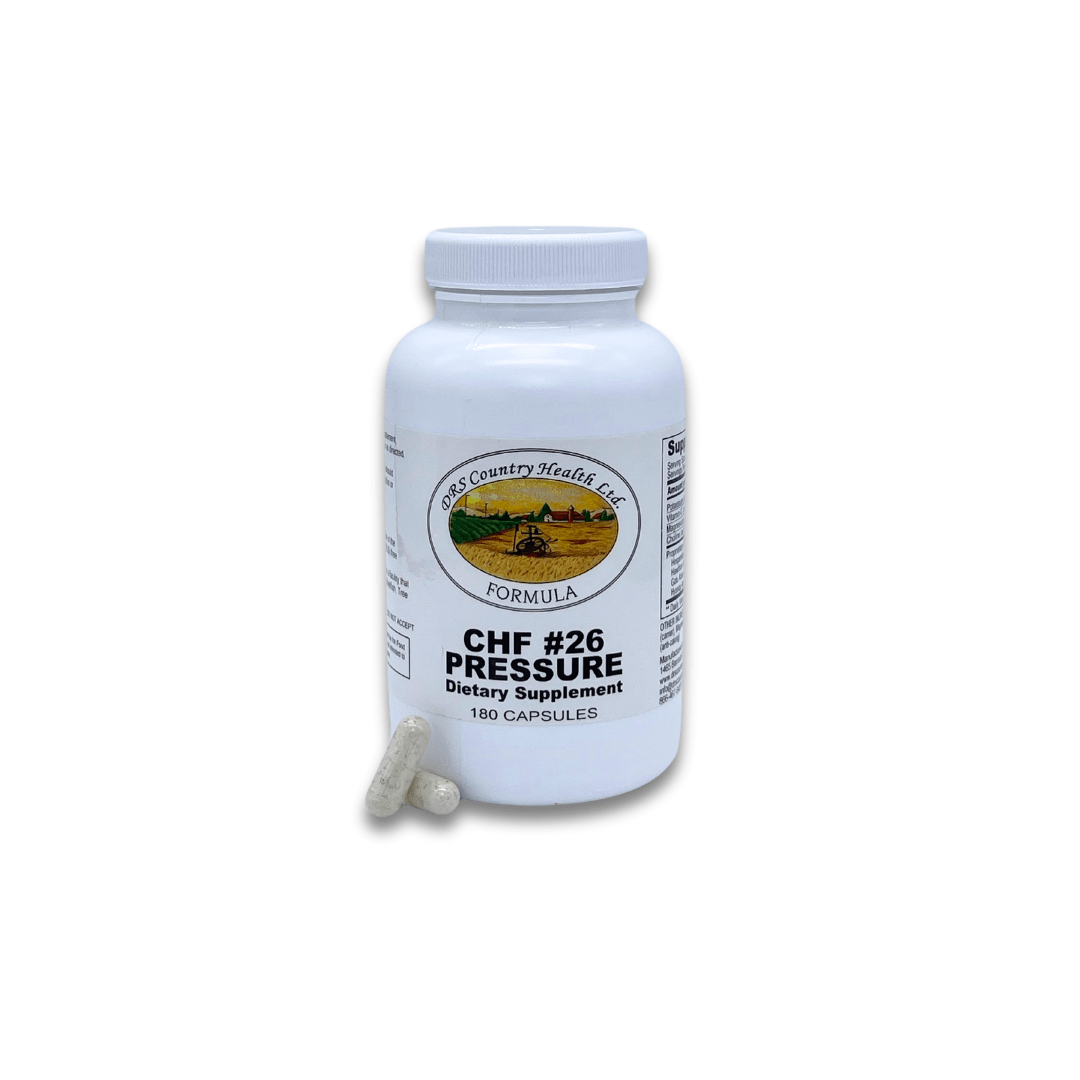
Minerals and traditional heart-friendly botanicals are a common foundation in nutritional blood-pressure support formulas. This article walks through the featured ingredients in CHF #26 Pressure 180 Capsules—Country Health’s magnesium-, potassium-, and herb-inclusive blend—and what NIH ODS and NCCIH sources report about these ingredients.
Full ingredient list (per 2-capsule serving): Potassium (as citrate) 80 mg; vitamin C (as calcium ascorbate) 20 mg; magnesium (as oxide) 187 mg; choline (as bitartrate) 40 mg; proprietary blend 514 mg of hesperidin (from citrus), rutin, garlic bulb, hawthorne berry, parsley leaf, black cohosh root, gotu kola leaf and stem, apple pectin, cayenne fruit, hyssop aerial parts, and a trace mineral blend. Other ingredients: magnesium stearate, microcrystalline cellulose, gelatin (capsule). Suggested use: two capsules three times daily, or as directed. Supplied: 180 capsules.
NIH ODS describes magnesium as a cofactor in more than 300 enzyme systems, including pathways that influence muscle and nerve function, blood glucose control, and blood pressure regulation. Clinical trial summaries on the ODS magnesium fact sheet note that magnesium supplementation has been associated with small reductions in blood pressure in meta-analyses, and FDA has authorized a qualified health claim that diets with adequate magnesium may reduce the risk of high blood pressure, while noting the evidence is inconsistent. Potassium, also covered by NIH ODS, helps nerves and muscles work normally and has been studied extensively for its relationship with blood pressure; higher potassium intakes from food patterns like DASH are linked with favorable blood-pressure profiles. CHF #26 provides 187 mg magnesium and 80 mg potassium citrate per two-capsule serving as a mineral base for the formula.
NCCIH reports that garlic supplements may modestly lower total and LDL cholesterol in people with high cholesterol and may have small effects on blood pressure in some research. Hawthorn has a long traditional use for the heart and blood vessels; NCCIH notes it has been studied in people for heart-related concerns. CHF #26 includes garlic bulb and hawthorne berry inside its 514 mg proprietary blend, alongside citrus bioflavonoids (hesperidin and rutin), parsley, cayenne, gotu kola, black cohosh, apple pectin, hyssop, and trace minerals.
Vitamin C (20 mg as calcium ascorbate) and choline (40 mg as bitartrate) sit beside the minerals. Hesperidin and rutin—citrus-derived flavonoids—open the proprietary blend and are classic companions in circulatory nutritional formulas. Together with cayenne and parsley, they support Country Health’s multi-herb “Pressure” design rather than a single-ingredient magnesium tablet.
Adults who already emphasize potassium-rich foods—beans, potatoes, leafy greens, yogurt—can still appreciate CHF #26’s capsule minerals and garlic–hawthorn blend as a convenient adjunct when their clinician agrees. Spreading two capsules across three daily servings matches the label and helps the magnesium and botanical blend fit a normal meal schedule rather than one large bolus.
CHF #26 combines meaningful magnesium, supplemental potassium, vitamin C, choline, and a 514 mg garlic–hawthorn–bioflavonoid blend. Label directions of two capsules three times daily let adults distribute the serving across the day. The 180-capsule bottle matches that multi-serving schedule.
Who might enjoy it: adults seeking magnesium and potassium with garlic and hawthorn companions; people whose clinician agrees a multi-ingredient circulatory nutrition formula fits their plan; and anyone who prefers Country Health’s capsule blend over juggling several single bottles.
Please check with your clinician first if you:
No. Supplements are not FDA-approved to diagnose, treat, cure, or prevent disease. Never change prescribed medicines without your clinician.
187 mg magnesium (as oxide) plus 80 mg potassium per two capsules.
The label suggests two capsules three times daily, or as directed by a qualified health professional.
Yes—both appear in the 514 mg proprietary blend with hesperidin, rutin, parsley, cayenne, and other botanicals.
Add CHF #26 Pressure to your cart or view the full product page and label.
This article is for general education only. It is not medical advice, and neither this article nor the product it discusses is meant to diagnose, treat, cure, or prevent any disease. Statements about dietary supplements have not been evaluated by the Food and Drug Administration. Talk with your doctor, pharmacist, or another qualified health professional before starting any supplement, especially if you are pregnant or breastfeeding, take prescription or over-the-counter medicines, or have a medical condition.