
By Jenn Resendiz
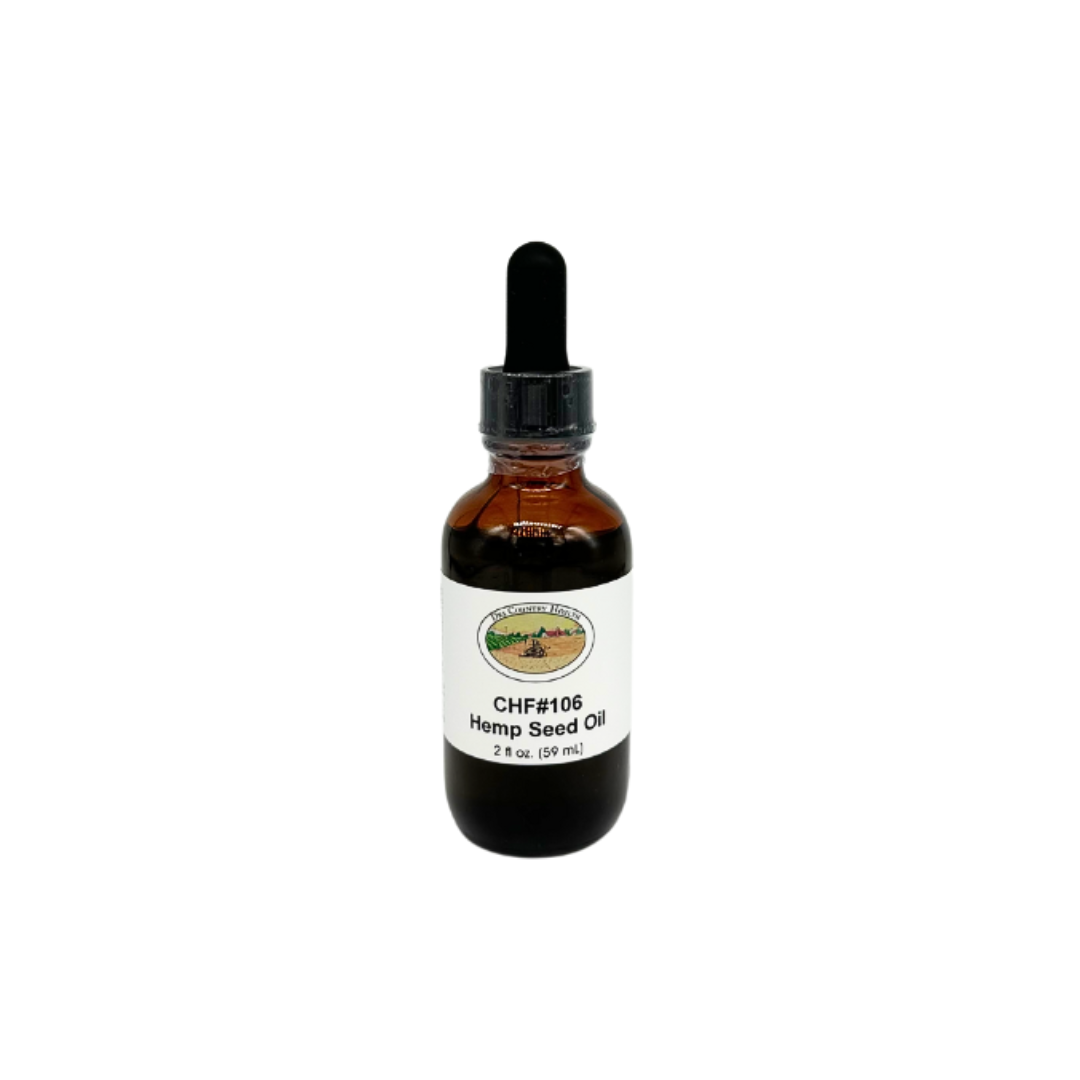
Hemp seeds have been eaten in parts of Asia since prehistoric times, and their oil is prized for its unusually balanced mix of essential fats. This article looks at the natural components of CHF #106 Hemp Seed Oil, Country Health’s 100% virgin organic hemp seed oil in a dropper bottle, focusing on its linoleic acid, alpha-linolenic acid (ALA), and gamma-linolenic acid (GLA), plus its natural tocopherols.
Full ingredient list: 100% virgin organic hemp seed oil. Suggested use: as a dietary supplement, take 15 drops daily or as directed. Supplied: 2 fluid ounces (59 mL). Because the label lists a single whole-food ingredient, the fatty acid details below come from published analyses of hemp seed oil rather than from the label.
No. Hemp seed oil is pressed from the seeds of the Cannabis sativa plant. The U.S. Food and Drug Administration explains that hemp seeds do not naturally contain THC or CBD, and that hemp seed ingredients contain only trace amounts picked up from other parts of the plant during harvesting and processing. In December 2018, FDA completed its evaluation of three “generally recognized as safe” (GRAS) notices for hemp seed ingredients, including hemp seed oil, and had no questions about the conclusion that they are safe for their intended food uses. FDA adds that eating these hemp seed ingredients cannot make a person “high.”
A 2020 review in Nutrients by Farinon and colleagues notes that hemp seeds typically contain 25% to 35% oil, along with easily digested protein, fiber, vitamins, minerals, and natural antioxidants.
Linoleic acid is the main fatty acid in hemp seed oil. The Farinon review reports that it accounts for more than half of the total fatty acids across the hemp varieties analyzed. NIH’s Office of Dietary Supplements (ODS) explains that linoleic acid and ALA are considered essential fatty acids, meaning the body cannot make them and they must come from the diet. The Farinon review notes that the active forms made from these essential fats are needed for many processes, including maintaining cell membrane structure, cardiovascular health, and the regulation of metabolic and inflammatory pathways. ODS adds that omega-6s, along with omega-3s, provide energy and are used to form signaling molecules called eicosanoids.
ALA is the second most abundant polyunsaturated fat in hemp seed oil, according to the Farinon review. ODS describes ALA as the only omega-3 fatty acid that is essential, and sets an Adequate Intake of 1.6 g per day for men and 1.1 g for women. The body can convert a small portion of ALA into the long-chain omega-3s EPA and DHA. ODS lists flaxseed, soybean, and canola oils, chia seeds, and walnuts as other plant sources.
What makes hemp seed oil stand out is the balance between these two essential fats. The Farinon review explains that hemp seed oil’s omega-6 to omega-3 ratio falls in the 3:1 to 5:1 range, which it describes as the ideal ratio, compared with an average closer to 10:1 in the diets of industrialized countries.
Hemp seed oil also naturally supplies gamma-linolenic acid (GLA), along with a related omega-3 called stearidonic acid (SDA). The Farinon review explains that these fats bypass a rate-limiting enzyme step, making it easier for the body to form longer-chain fatty acids. The review adds that GLA is rapidly converted to dihomo-gamma-linolenic acid (DGLA), which can act as a precursor of anti-inflammatory compounds.
Human research supports the oil’s skin-friendly reputation. In a 20-week randomized crossover study published in the Journal of Dermatological Treatment, adults with atopic dermatitis who took dietary hemp seed oil had higher blood levels of linoleic acid, ALA, and GLA, reported less skin dryness and itchiness, and used less skin medication than when they took olive oil. The researchers attributed these improvements to the oil’s balanced, abundant supply of polyunsaturated fats.
Tocopherols are the vitamin E family of fat-soluble antioxidants. The Farinon review reports that tocopherols and phytosterols are the most relevant compounds in the small unsaponifiable fraction of hemp seed oil, and that tocopherols are its dominant antioxidants, helping protect the oil from oxidation. ODS notes that vegetable oils, nuts, and seeds are among the best food sources of vitamin E.
CHF #106 delivers a whole-food oil in which essential omega-6 and omega-3 fats arrive in a naturally balanced ratio, alongside GLA and protective tocopherols. A few drops a day is an easy way to add plant-based essential fatty acids to a routine.
Who might consider it: adults who want a plant source of omega-3 and omega-6 fats, people who enjoy whole-food supplements, those who do not eat much flax, chia, or walnuts, and anyone whose provider agrees it fits their plan.
It is made from hemp seeds, which FDA notes do not naturally contain THC or CBD; seed ingredients may carry only trace amounts from processing.
No. Dietary supplements are not intended to diagnose, treat, cure, or prevent disease. Talk with your clinician about any health condition.
The label suggests 15 drops daily or as directed.
Add CHF #106 Hemp Seed Oil to your cart or view the full product page and label.
This article is for general education only. It is not medical advice, and neither this article nor the product it discusses is meant to diagnose, treat, cure, or prevent any disease. Statements about dietary supplements have not been evaluated by the Food and Drug Administration. Talk with your doctor, pharmacist, or another qualified health professional before starting any supplement, especially if you are pregnant or breastfeeding, take prescription or over-the-counter medicines, or have a medical condition.