
By Jenn Resendiz
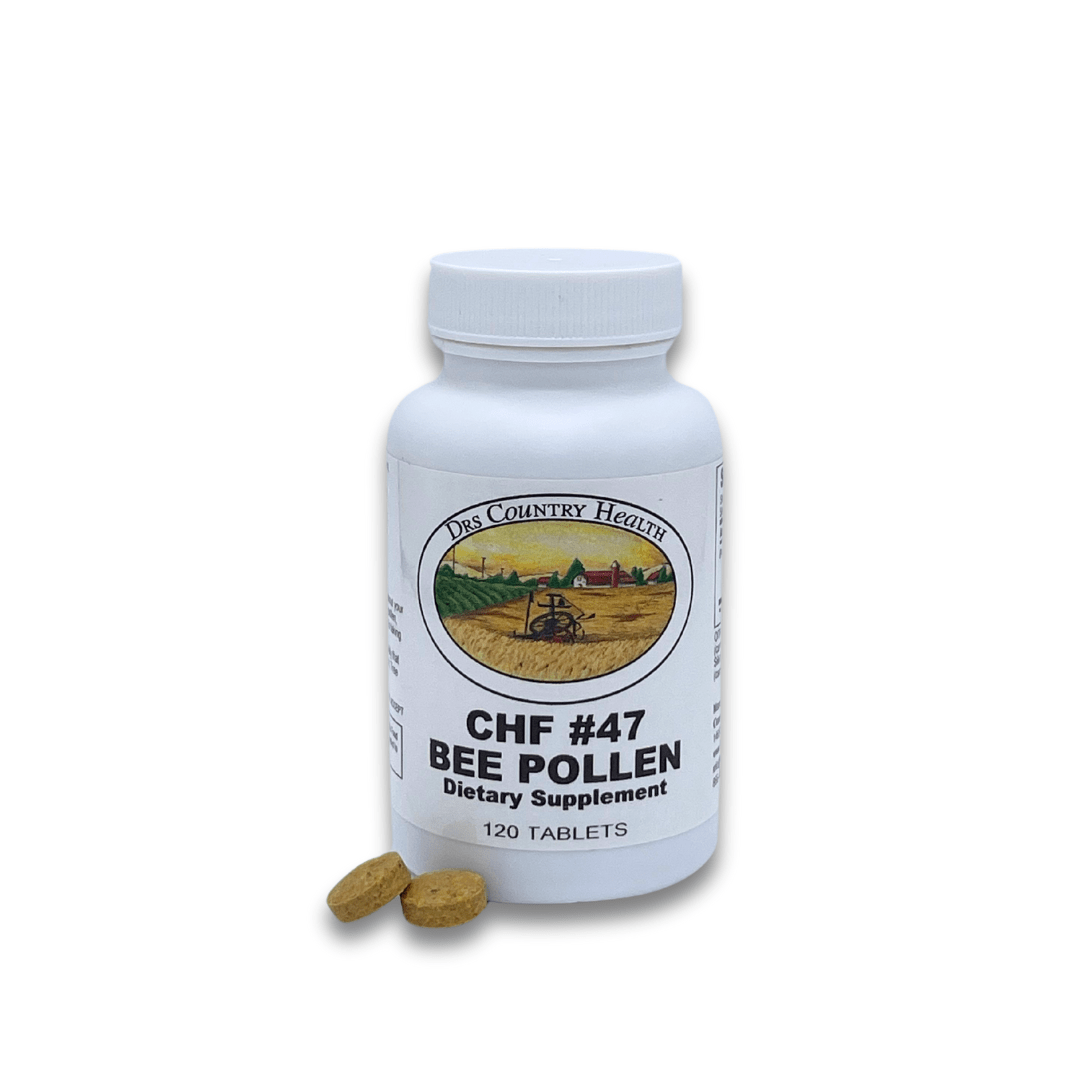
Hive products have nourished traditional diets for thousands of years. This article focuses on the three bee-derived ingredients in CHF #47 Bee Pollen 120 Capsules and what published research says about their nutritional roles.
Full ingredient list (per 2-capsule serving): Proprietary blend 1,000 mg of bee pollen, royal jelly, and propolis. Other ingredients: magnesium stearate, silica, and gelatin (capsule). Suggested use: take 2 capsules daily or as directed. Label caution: do not give bee products to infants under one year of age; do not take if you have an allergy to honeybee pollen.
A 2021 peer-reviewed review (Nutrients / PMC) summarizes bee pollen as a functional food containing proteins and essential amino acids, carbohydrates, lipids (including unsaturated fatty acids), vitamins, minerals, flavonoids, and carotenoids. Amounts vary by floral source, season, and geography—one reason quality-minded brands often blend pollen from multiple sources. Traditional use spans vitality, recovery after exertion, and general nourishment rather than a single isolated drug effect.
CHF #47 delivers bee pollen as the lead ingredient in a 1,000 mg two-capsule proprietary blend, paired with royal jelly and propolis for a complete hive-trio approach.
Royal jelly is the creamy secretion nurse bees feed to larvae destined to become queens. Reviews note that it is rich in proteins (including unique major royal jelly proteins), lipids, sugars, and B vitamins—especially pantothenic acid pathways discussed in nutrition literature. Athletes and wellness consumers often use royal jelly alongside pollen when they want hive nutrients in capsule form rather than raw products.
NIH ODS lists pantothenic acid (vitamin B5) as essential for coenzyme A and fatty-acid metabolism; while royal jelly is not a standardized B5 supplement, its traditional reputation for “nourishing density” reflects that micronutrient richness.
Propolis is the resinous material bees collect from tree buds and mix with wax and enzymes to seal and protect the hive. It is naturally rich in polyphenols and flavonoids. ODS and MedlinePlus index propolis as a distinct bee product studied for oral and topical uses; research continues on its antioxidant phytochemistry. In CHF #47, propolis joins pollen and royal jelly so each serving offers three complementary hive fractions rather than pollen alone.
Two capsules delivering 1,000 mg of combined bee pollen, royal jelly, and propolis keep serving sizes simple. That matters for people who already take other Country Health products and want a dedicated bee-product capsule without overlapping long botanical lists. Composition of pollen and propolis still varies by harvest, which is why peer-reviewed reviews emphasize source diversity and quality testing.
Positive nutrition framing focuses on what these foods provide—amino acids, polyphenols, and micronutrient density—rather than disease claims. Use them as part of an overall diet your clinician supports.
CHF #47 keeps the formula simple: 1,000 mg of bee pollen, royal jelly, and propolis per two capsules. That clarity appeals to people who want a dedicated bee-product capsule without a long botanical list.
Who might enjoy it: adults seeking a straightforward Country Health bee-pollen blend, people who prefer capsules over loose pollen granules, and anyone whose clinician has cleared bee products for their allergy profile.
Please check with your clinician first if you:
Some traditional users take local pollen with that hope, but controlled evidence is limited and allergy risk is real. Never use bee pollen to self-treat allergies without clinical guidance.
The label suggests 2 capsules daily or as directed by a qualified health professional.
No. Pollen is flower pollen packed by bees; royal jelly is a glandular secretion; propolis is plant resin processed by bees. CHF #47 includes all three.
No. The three ingredients share a 1,000 mg proprietary blend per two capsules.
Add CHF #47 Bee Pollen to your cart or view the full product page and label.
This article is for general education only. It is not medical advice, and neither this article nor the product it discusses is meant to diagnose, treat, cure, or prevent any disease. Statements about dietary supplements have not been evaluated by the Food and Drug Administration. Talk with your doctor, pharmacist, or another qualified health professional before starting any supplement, especially if you are pregnant or breastfeeding, take prescription or over-the-counter medicines, or have a medical condition.