
By Jenn Resendiz
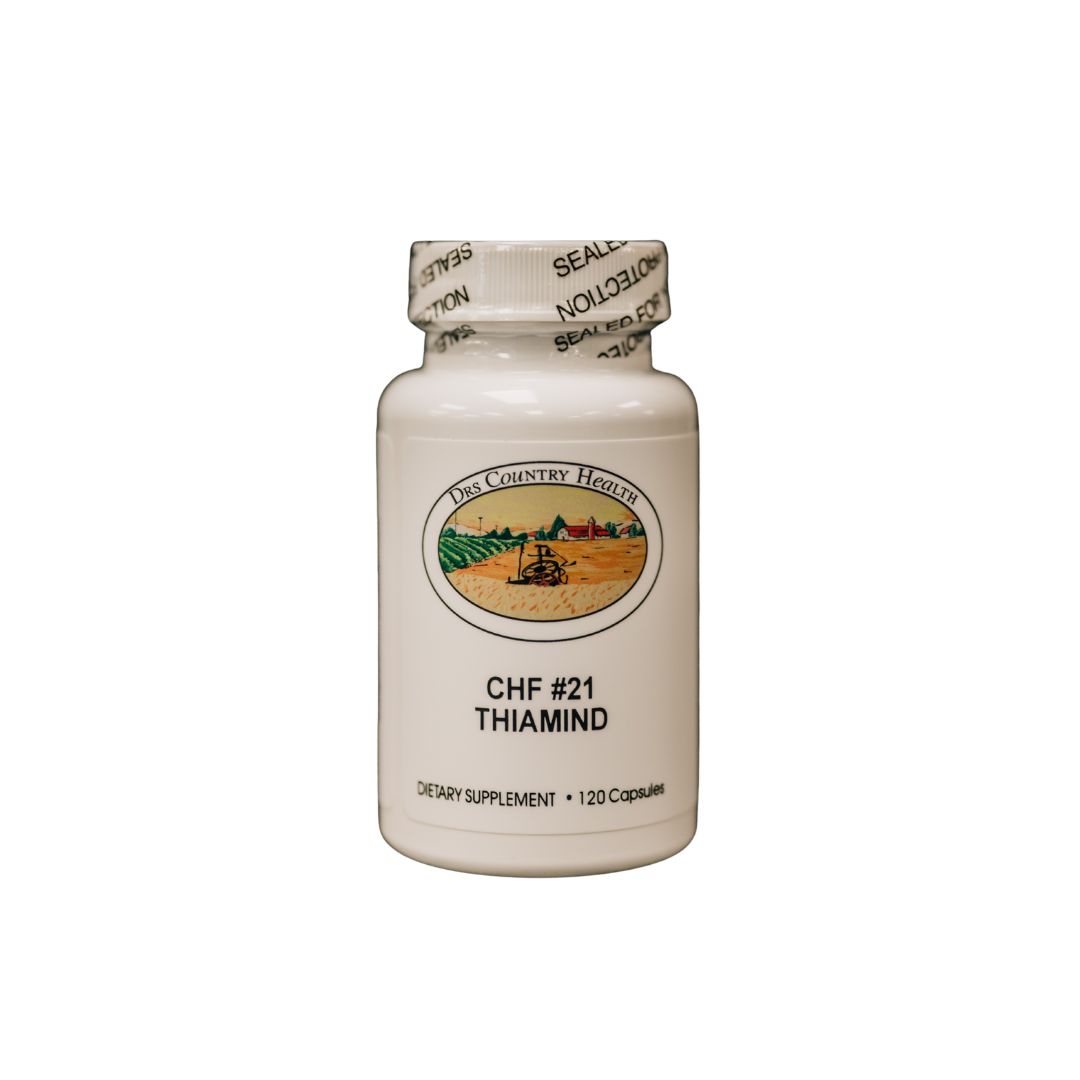
Thiamin, or vitamin B1, is the spark plug of energy metabolism, and two fat-soluble forms of it have drawn growing interest from researchers. This article explores the ingredients in CHF #21 ThiaMind, Country Health’s focused thiamin formula built on benfotiamine and thiamine tetrahydrofurfuryl disulfide (TTFD), paired with magnesium glycinate, and what NIH and peer-reviewed studies report about each one.
Full ingredient list (per two capsules, as stated on the label): Magnesium (as glycinate) 25 mg (6% DV); benfotiamine (active B1 derivative) 100 mg; tetrahydrofurfuryl disulfide (active B1 derivative) 100 mg. Other ingredients: magnesium stearate, microcrystalline cellulose, gelatin (capsule). Suggested use: take one capsule daily or as directed. Supplied: 120 capsules.
NIH’s Office of Dietary Supplements (ODS) explains that thiamin is a water-soluble B vitamin that plays a critical role in energy metabolism and, therefore, in the growth, development, and function of cells. About 80% of the 25 to 30 mg of thiamin in the adult body is in the form of thiamin diphosphate, the active coenzyme that helps enzymes such as transketolase turn food into usable energy. The body stores only small amounts, mainly in the liver, so a steady daily supply matters.
ODS lists whole grains, meat, and fish as food sources, with pork a major source and breads and cereals commonly fortified. The adult RDA is 1.2 mg for men and 1.1 mg for women. ODS also notes that some groups tend to run lower, including people with diabetes, older adults, and people who take the diuretic furosemide, which has been linked to urinary thiamin loss.
Benfotiamine is a synthetic, fat-soluble derivative of thiamin. ODS explains that it is not water soluble and is converted to thiamin in the body. A 2018 review in the European Review for Medical and Pharmacological Sciences describes why it was developed: ordinary thiamin has slower absorption and lower bioavailability, so researchers created lipid-soluble derivatives, and among them benfotiamine is regarded as the first choice based on its safety and clinical data.
The review explains that benfotiamine boosts the activity of transketolase, which steers glucose by-products away from the formation of advanced glycation end products (AGEs), compounds associated with metabolic stress. In the BENDIP randomized, placebo-controlled trial, adults with diabetes-related nerve symptoms who took 300 or 600 mg of benfotiamine daily for six weeks showed improvement on a neuropathy symptom score in the per-protocol analysis, with the larger dose doing better, and treatment was well tolerated. ODS summarizes three small randomized studies with similar favorable findings.
TTFD has a fascinating origin story. A review in Medical Science Monitor explains that TTFD is the synthetic counterpart of allithiamine, a form of thiamin discovered in Japan in 1951 that forms naturally when garlic bulbs are cut or crushed. Japanese researchers found that this disulfide form had a much more powerful metabolic effect than the thiamin it came from, and they went on to create synthetic versions; TTFD is the most modern of these disulfide derivatives.
Because TTFD carries the same core thiamin molecule, the review notes that at least part of its benefits overlap with those of standard thiamin, while its fat-soluble disulfide structure is what researchers believe sets it apart. Pairing TTFD with benfotiamine gives ThiaMind two complementary fat-soluble routes to the vitamin.
Magnesium and thiamin are natural partners in energy production. ODS describes magnesium as a cofactor in more than 300 enzyme systems, including those that regulate protein synthesis, muscle and nerve function, blood glucose control, and blood pressure, and notes that it is required for energy production and glycolysis. Magnesium glycinate is magnesium bound to the amino acid glycine. Green leafy vegetables, legumes, nuts, seeds, and whole grains are good food sources.
ThiaMind takes a targeted approach: rather than a broad B-complex, it concentrates on two well-researched, fat-soluble thiamin forms and adds a gentle dose of magnesium to support the enzymes that put thiamin to work. It is a straightforward way to emphasize vitamin B1 in a daily routine.
Who might consider it: adults interested in focused thiamin support for energy metabolism and nerve health, people whose diets are low in whole grains or other thiamin-rich foods, and anyone whose provider agrees a higher-potency thiamin formula fits their plan.
ODS notes that no upper limit has been set for thiamin, because adverse effects from high intakes have not been reported and the body excretes excess amounts in the urine.
No. Dietary supplements are not intended to diagnose, treat, cure, or prevent disease. Ongoing nerve or memory symptoms deserve a clinician’s evaluation.
It focuses on two fat-soluble thiamin derivatives, benfotiamine and TTFD, plus magnesium, instead of the full B-vitamin family.
The label lists amounts per two capsules and suggests taking one capsule daily or as directed by your health professional.
Add CHF #21 ThiaMind to your cart or view the full product page and label.
This article is for general education only. It is not medical advice, and neither this article nor the product it discusses is meant to diagnose, treat, cure, or prevent any disease. Statements about dietary supplements have not been evaluated by the Food and Drug Administration. Talk with your doctor, pharmacist, or another qualified health professional before starting any supplement, especially if you are pregnant or breastfeeding, take prescription or over-the-counter medicines, or have a medical condition.