
By Jenn Resendiz
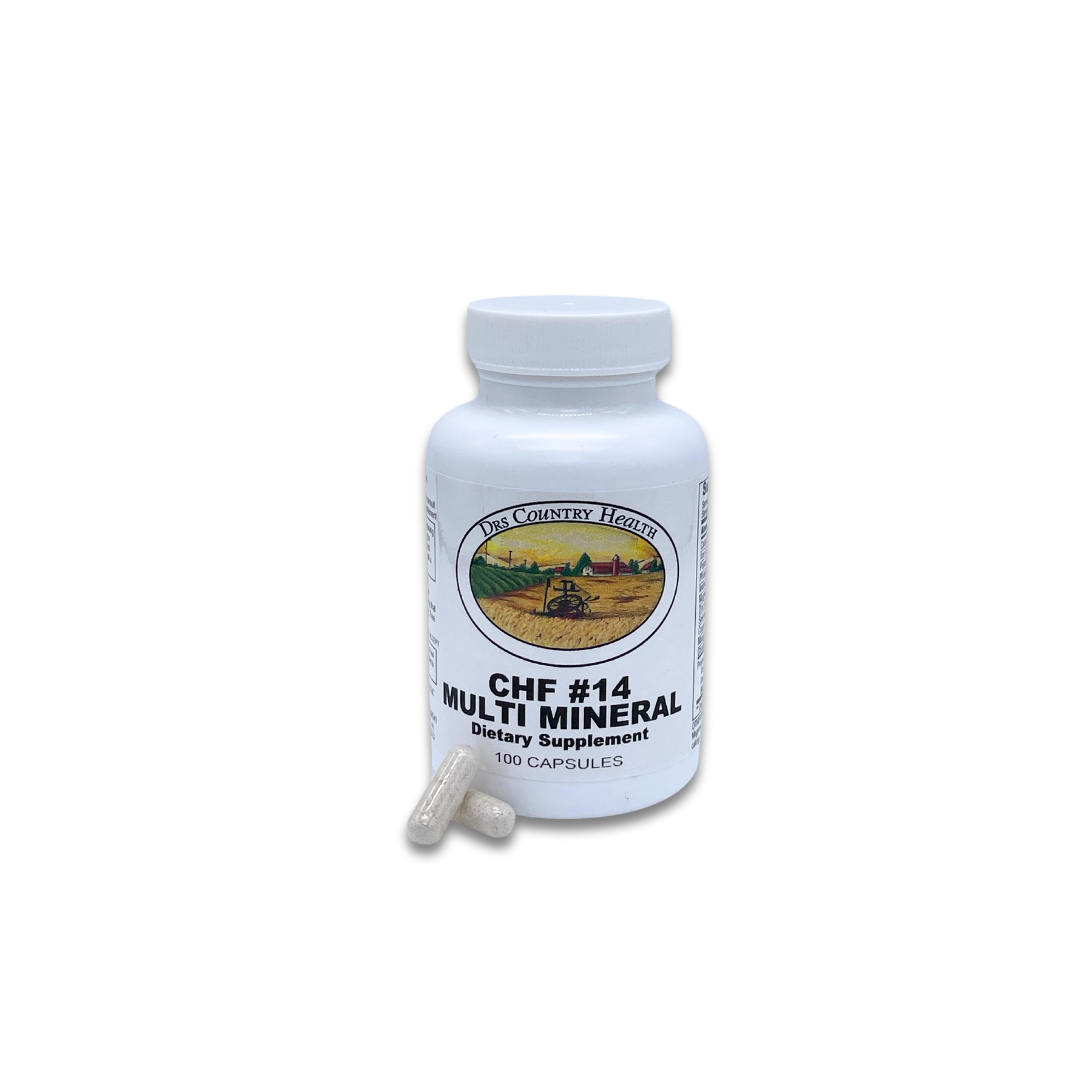
Vitamins get a lot of attention, yet minerals quietly run hundreds of everyday reactions—from thyroid hormones to oxygen transport. This article walks through the featured minerals in CHF #14 Multi-Mineral 100 Capsules and what NIH ODS research says about them.
Full ingredient list (per 4-capsule serving): Calcium (as chelate) 180 mg (14% DV); Iron (as chelate) 10 mg (56% DV); Potassium (as citrate) 50 mg (1% DV); Iodine (from kelp) 40 mcg (27% DV); Magnesium (as aspartate) 100 mg (24% DV); Zinc (as chelate) 5 mg (45% DV); Selenium (as L-selenomethionine) 12.5 mcg (23% DV); Copper (as chelate) 50 mcg (6% DV); Manganese (as chelate) 5 mg (217% DV); Chromium (as chelate) 10 mcg (29% DV); and a proprietary blend 205 mg of trace mineral blend, beet root, alfalfa leaf, dandelion root, parsley root, and yellowdock root. Other ingredients: magnesium stearate, silica, and a gelatin capsule. The label suggests 4 capsules daily, or as directed.
ODS explains that calcium builds and maintains bones and teeth and supports muscle and nerve function; adults typically need 1,000–1,200 mg daily from food and supplements combined. Magnesium is a cofactor in more than 300 enzyme systems for muscle, nerve, and energy pathways, with adult RDAs around 310–420 mg. Potassium, the major intracellular electrolyte, supports cell, heart, and muscle function and is abundant in fruits, vegetables, and legumes.
CHF #14 provides 180 mg calcium, 100 mg magnesium as aspartate, and 50 mg potassium citrate per four-capsule serving—meaningful contributions that sit comfortably beside a mineral-rich diet.
Iron is required for hemoglobin and myoglobin, which carry oxygen in blood and muscle, ODS notes. Many premenopausal adults need more dietary iron; CHF #14 supplies 10 mg as a chelate (56% DV). Keep iron products away from young children—the label carries the standard accidental-overdose warning.
Iodine from kelp supports thyroid hormone production (T4 and T3), which regulate metabolism and development. The adult iodine RDA is 150 mcg; this formula provides 40 mcg (27% DV). Zinc supports immune function, protein synthesis, and wound healing, with adult RDAs of 8–11 mg; CHF #14 includes 5 mg chelated zinc (45% DV).
Selenium becomes part of antioxidant selenoproteins such as glutathione peroxidases; the adult RDA is 55 mcg, and CHF #14 provides 12.5 mcg as selenomethionine. Copper helps iron metabolism and connective tissue enzymes; manganese activates enzymes for bone formation and antioxidant defense; chromium contributes to normal insulin action and macronutrient metabolism. ODS documents food sources ranging from Brazil nuts and seafood (selenium) to whole grains, nuts, and organ meats for the trace minerals. This formula includes copper 50 mcg, manganese 5 mg, and chromium 10 mcg per serving.
The 205 mg proprietary blend adds beet root—naturally rich in betaine and plant nutrients—plus alfalfa, dandelion, parsley, and yellowdock roots with a trace mineral blend. These botanicals are traditional companions in multi-mineral formulas and supply plant-based micronutrients alongside the labeled elemental minerals.
CHF #14 is a broad multi-mineral capsule: major minerals (calcium, magnesium, potassium), iron and iodine, and a full trace-mineral set (zinc, selenium, copper, manganese, chromium) with a beet-and-herb base. Four capsules daily matches the label’s serving size so you get the full listed amounts.
Who might enjoy it: adults who want a dedicated mineral formula rather than only a multivitamin, people whose diets are light on seafood, nuts, or leafy greens, and anyone who prefers chelated minerals with Country Health’s beet-root botanical blend.
Please check with your clinician first if you:
Four capsules provide the full Supplement Facts amounts listed above.
It is mineral-focused and does not list vitamins A, C, D, E, or a full B-complex. Many people use it alongside food and, if needed, a separate vitamin product—ask your clinician.
Iron supports oxygen transport. Premenopausal adults often need more; others may not. Confirm whether supplemental iron is right for you.
Calcium, iron, zinc, copper, manganese, and chromium are listed as chelates; magnesium is aspartate; selenium is selenomethionine; potassium is citrate; iodine is from kelp.
Add CHF #14 Multi-Mineral to your cart or view the full product page and label.
This article is for general education only. It is not medical advice, and neither this article nor the product it discusses is meant to diagnose, treat, cure, or prevent any disease. Statements about dietary supplements have not been evaluated by the Food and Drug Administration. Talk with your doctor, pharmacist, or another qualified health professional before starting any supplement, especially if you are pregnant or breastfeeding, take prescription or over-the-counter medicines, or have a medical condition.