
By Jenn Resendiz
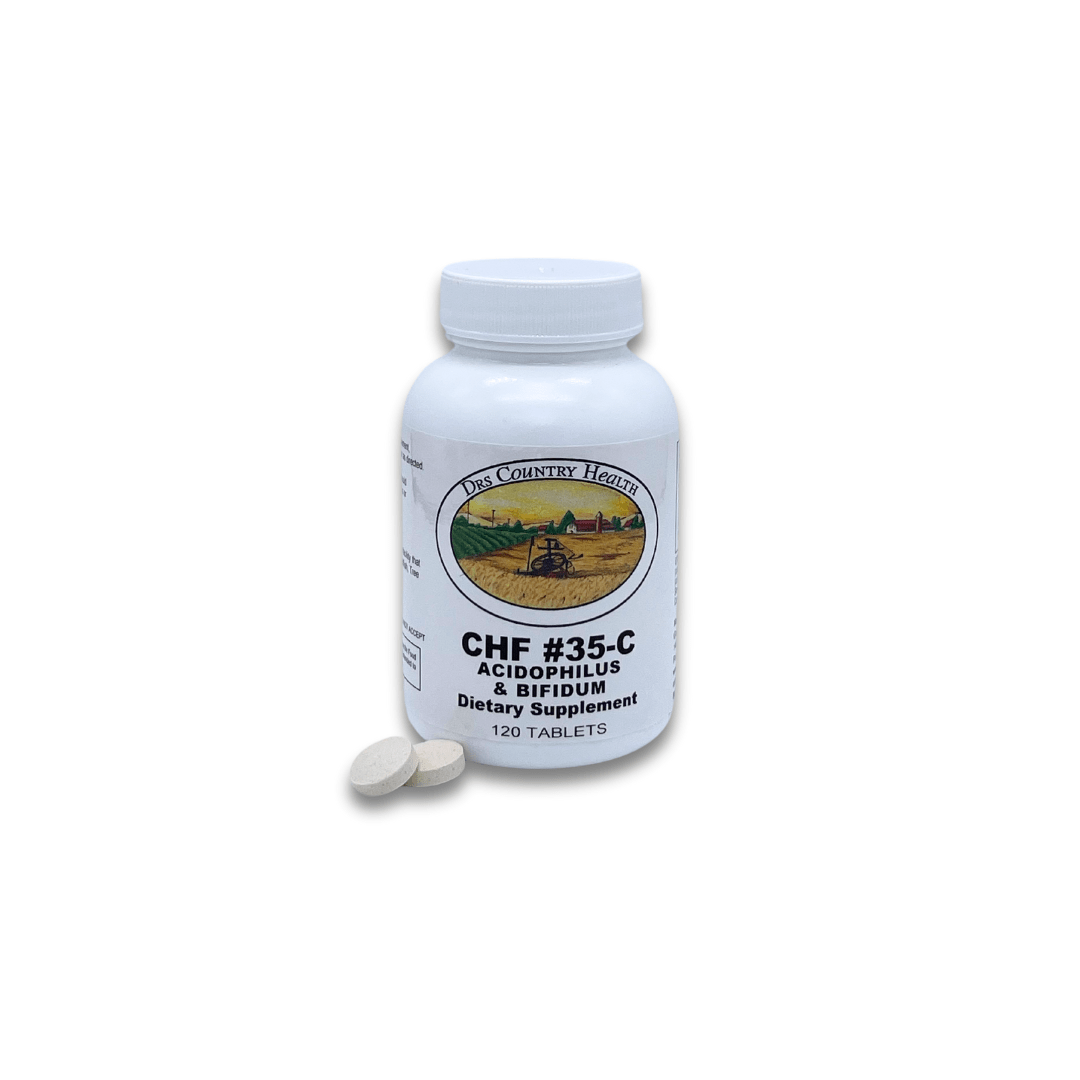
Chewable probiotics are popular with families because they skip the capsule and the refrigerator. CHF #35C Probiotic (Chewable) 120 Tablets uses spore-forming Bacillus bacteria, which are naturally shelf-stable, in a sugar-free chewable base. Here is what research shows about its ingredients.
Full ingredient list (per 1 tablet): shelf-stable probiotic blend of 2 billion CFU Bacillus coagulans, Bacillus subtilis, and Bacillus clausii. Other ingredients: xylitol, sorbitol, citric acid, natural flavor, stevia leaf extract, stearic acid. The label suggests one or two tablets daily.
Many probiotic bacteria are delicate, which is why so many products need refrigeration. Bacillus species can form spores, a dormant state protected by a tough outer coat. A 2017 review in Frontiers in Microbiology explains that spore-forming bacilli tolerate the harsh environment of the digestive tract well and are more stable during processing and storage than many other probiotics, making them well suited to health-promoting formulas. That stability is what makes a room-temperature chewable tablet practical.
The same review notes that Bacillus species naturally produce enzymes, vitamins, and antimicrobial peptides, which may help explain their interest as probiotics.
Bacillus clausii has the most pediatric research of the three species. A 2018 meta-analysis of six randomized trials involving 1,298 children with acute diarrhea found that B. clausii shortened diarrhea by about 9 hours on average and shortened hospital stays by almost a day compared with control groups. It is widely used in clinical practice for children’s digestive health, and it gives CHF #35C a species with a strong pediatric track record.
Bacillus coagulans is one of the most studied spore-forming probiotics. In a 2023 network meta-analysis of 81 randomized trials in adults with irritable bowel syndrome, two B. coagulans strains ranked among the most effective probiotics for easing abdominal pain. Bacillus subtilis has a long history in fermented foods and is valued for the enzymes it produces.
Together with B. clausii, these species give the tablet a well-rounded spore-forming blend. The NIH Office of Dietary Supplements (ODS) explains that many probiotics help inhibit the growth of harmful microbes in the gut and support a balanced microbiota.
Xylitol and sorbitol are sugar alcohols (polyols) that give the tablet a pleasant sweetness without sugar. A 2016 review by a dental researcher explains that xylitol became a common ingredient in tooth-friendly (noncariogenic) sweets, oral hygiene products, and diabetic foods. The review also notes that xylitol is better tolerated by the digestive system than sorbitol and similar polyols, and that the body can adapt to polyols over time.
Stevia leaf extract adds natural sweetness, while citric acid and natural flavor give the tablet its taste and stearic acid helps form the tablet.
CFU (colony-forming units) counts live, viable microbes. ODS notes that many probiotic supplements contain 1 to 10 billion CFU per dose and that higher counts are not necessarily more effective. At 2 billion CFU per tablet, or 4 billion at two tablets, CHF #35C sits within that typical range in a form that is easy to take.
The spore-forming probiotics provide stability at room temperature and the hardiness to survive the stomach, while xylitol, sorbitol, and stevia make the tablet pleasant to chew without sugar. NCCIH notes that probiotics have an extensive history of apparently safe use, particularly in healthy people, and ODS says side effects are usually minor, such as gas.
Who might enjoy it: adults and children who prefer not to swallow capsules and want a shelf-stable probiotic that travels well.
A few groups should check with a clinician or pediatrician before starting. The label does not list an age range. Please ask first if:
A note for dog owners: FDA warns that xylitol can be poisonous to dogs, causing a rapid drop in blood sugar. Keep the bottle out of pets’ reach, and call your veterinarian right away if a dog eats any tablets.
#35C is a chewable tablet with 2 billion CFU. #35 is a capsule with 5 billion CFU plus the prebiotic fibers FOS and inulin. Both use Bacillus coagulans, subtilis, and clausii.
No. The label calls it a shelf-stable blend, and Bacillus spores are stable at room temperature. Keep it cool and dry.
It is a chewable designed for easy use, and B. clausii has been studied in children. The label does not list an age range, so ask your pediatrician first.
Yes, in normal amounts. It is better tolerated than many other sugar alcohols. It is dangerous for dogs, so store tablets out of their reach.
Add CHF #35C Probiotic (Chewable) to your cart or view the full product page and label.
This article is for general education only. It is not medical advice, and neither this article nor the product it discusses is meant to diagnose, treat, cure, or prevent any disease. Statements about dietary supplements have not been evaluated by the Food and Drug Administration. Talk with your doctor, pharmacist, or another qualified health professional before starting any supplement, especially if you are pregnant or breastfeeding, take prescription or over-the-counter medicines, or have a medical condition.