
By Jenn Resendiz
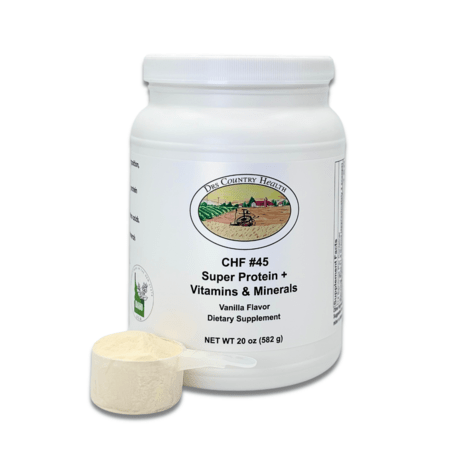
A protein shake with a built-in multivitamin can simplify a morning routine. CHF #45 Super Protein+Vitamins & Minerals Vanilla combines whey protein with vitamins and minerals, most at about 100% of the Daily Value. Here is what research says about its main ingredients.
Full nutrition panel (per 2 scoops, 41.6 g): 180 calories; total fat 6.2 g (saturated fat 3.6 g); cholesterol 164 mg; sodium 82 mg; total carbohydrate 3.3 g (sugars 1.4 g); protein 30 g (from high-IgG whey protein); vitamin A (as beta-carotene) 900 mcg RAE; vitamin C (as calcium ascorbate) 90 mg; calcium 271 mg; iron 0.41 mg; vitamin D3 20 mcg (800 IU); vitamin E (d-alpha-tocopherol) 15 mg; thiamin 1.2 mg; riboflavin (as R-5-P) 1.3 mg; niacin (as niacinamide) 16 mg NE; vitamin B6 (as P-5-P) 1.7 mg; folate 680 mcg DFE (as L-methylfolate 400 mcg); vitamin B12 (as methylcobalamin) 2.4 mcg; biotin 30 mcg; pantothenic acid 5 mg; phosphorus 279 mg; magnesium 25 mg; zinc (as amino acid chelate) 5.5 mg; potassium 164 mg. Other ingredients: stevia, natural vanilla flavor, silica. The fat, cholesterol, sodium, carbohydrate, and several minerals are listed as naturally occurring in the whey.
Whey is one of the two main proteins in milk (casein is the other). The NIH Office of Dietary Supplements (ODS) explains that whey is a complete protein, digests faster than casein, and has more leucine than casein or soy. Leucine and the other branched-chain amino acids might help stimulate protein synthesis in exercised muscle. “High IgG” means the whey is rich in immunoglobulins, antibody proteins found in milk.
A 2018 meta-analysis of 49 randomized trials (1,863 participants) found that protein supplements added to resistance training for at least 6 weeks modestly increased muscle strength and size. Gains leveled off once total protein intake reached about 1.6 g per kilogram of body weight per day, and the benefit was smaller in older adults. In other words, protein shakes help most when combined with strength training and when your diet is short on protein.
ODS lists the adult RDA for protein as 0.8 g/kg per day, about 54 g for a 150-pound person, and notes that athletes may need 1.2 to 2.0 g/kg. One serving of CHF #45 supplies 30 g. No upper limit has been set for protein. ODS reports that high-protein diets of two to three times the RDA do not appear to harm kidney function, bone health, or blood lipids in healthy people, though it advises caution with high intakes from supplements because data are limited. People with kidney disease should follow their clinician’s protein advice.
The panel also shows 164 mg of cholesterol (55% of the Daily Value) and 3.6 g of saturated fat (18% of the Daily Value) per serving, which is worth factoring in if you have been advised to limit either. Because whey comes from milk, people with a milk allergy should avoid it. The 1.4 g of naturally occurring sugars may include some lactose. MedlinePlus notes that people with lactose intolerance can usually manage by eating less lactose or using lactase pills or drops.
Each serving provides 20 mcg (800 IU) of vitamin D3, which matches the Daily Value and the RDA for adults over 70 (15 mcg is the RDA for younger adults). ODS explains that vitamin D helps the body absorb calcium and maintain bone health, and that few foods naturally contain much of it; fatty fish and fortified milk are key sources. The upper limit for adults is 100 mcg (4,000 IU) a day, so a daily shake is well within safe limits even with a separate vitamin D supplement at typical doses.
Folate is provided as 400 mcg of L-methylfolate (listed as 680 mcg DFE). ODS says this active form has bioavailability equal to or greater than folic acid, though official conversion factors are not formally set. The 1,000 mcg upper limit applies to folic acid from supplements and fortified foods. Vitamin B12 is provided as methylcobalamin at 2.4 mcg, exactly the adult RDA. Pairing folate with B12 is sensible because high folate intakes can mask the anemia of B12 deficiency.
ODS notes that older adults, vegetarians, and people taking metformin or acid-reducing medicines are at higher risk of low B12, and some may need more than the RDA, so ask your clinician if you are in one of those groups.
Zinc (5.5 mg) is half the Daily Value and well under the 40 mg upper limit. Calcium (271 mg) comes from whey and calcium ascorbate. The other vitamins (A as beta-carotene, C, E, B1, B2, niacin, B6, biotin, and pantothenic acid) are at about 100% of the Daily Value, similar to a basic multivitamin, so taking CHF #45 along with a separate multivitamin would roughly double your intake of many nutrients. The beta-carotene amount (about 1.8 mg) is far below the 20 mg daily dose that raised lung cancer risk in smokers in the ATBC trial.
A note on the label: the product description mentions fiber and added enzymes, but the Supplement Facts panel lists neither, and the panel does not show dietary fiber. We based this review on the facts panel.
The idea is simple: a complete protein source with a daily dose of vitamins and minerals. The 30 g of whey supports the protein needs of active people and older adults trying to maintain muscle, and the vitamin panel works like a basic multivitamin. It is best used alongside resistance exercise and a balanced diet.
Who might consider it: adults who struggle to get enough protein from food, people doing strength training, and older adults working with a clinician on maintaining muscle.
Who should ask a clinician first:
Each 2-scoop serving (41.6 g) provides 30 g of protein from high-IgG whey, with 180 calories.
It provides many vitamins at about 100% of the Daily Value, similar to a basic multivitamin, so many people would not need both. Ask your clinician about your needs.
The description mentions fiber, but the Supplement Facts panel does not list dietary fiber or fiber ingredients.
In healthy people, research summarized by ODS shows no harm from high-protein diets. People with kidney disease should follow their clinician’s guidance.
Add CHF #45 Super Protein+Vitamins & Minerals to your cart or view the full product page and label.
This article is for general education only. It is not medical advice, and neither this article nor the product it discusses is meant to diagnose, treat, cure, or prevent any disease. Statements about dietary supplements have not been evaluated by the Food and Drug Administration. Talk with your doctor, pharmacist, or another qualified health professional before starting any supplement, especially if you are pregnant or breastfeeding, take prescription or over-the-counter medicines, or have a medical condition.