
By Jenn Resendiz
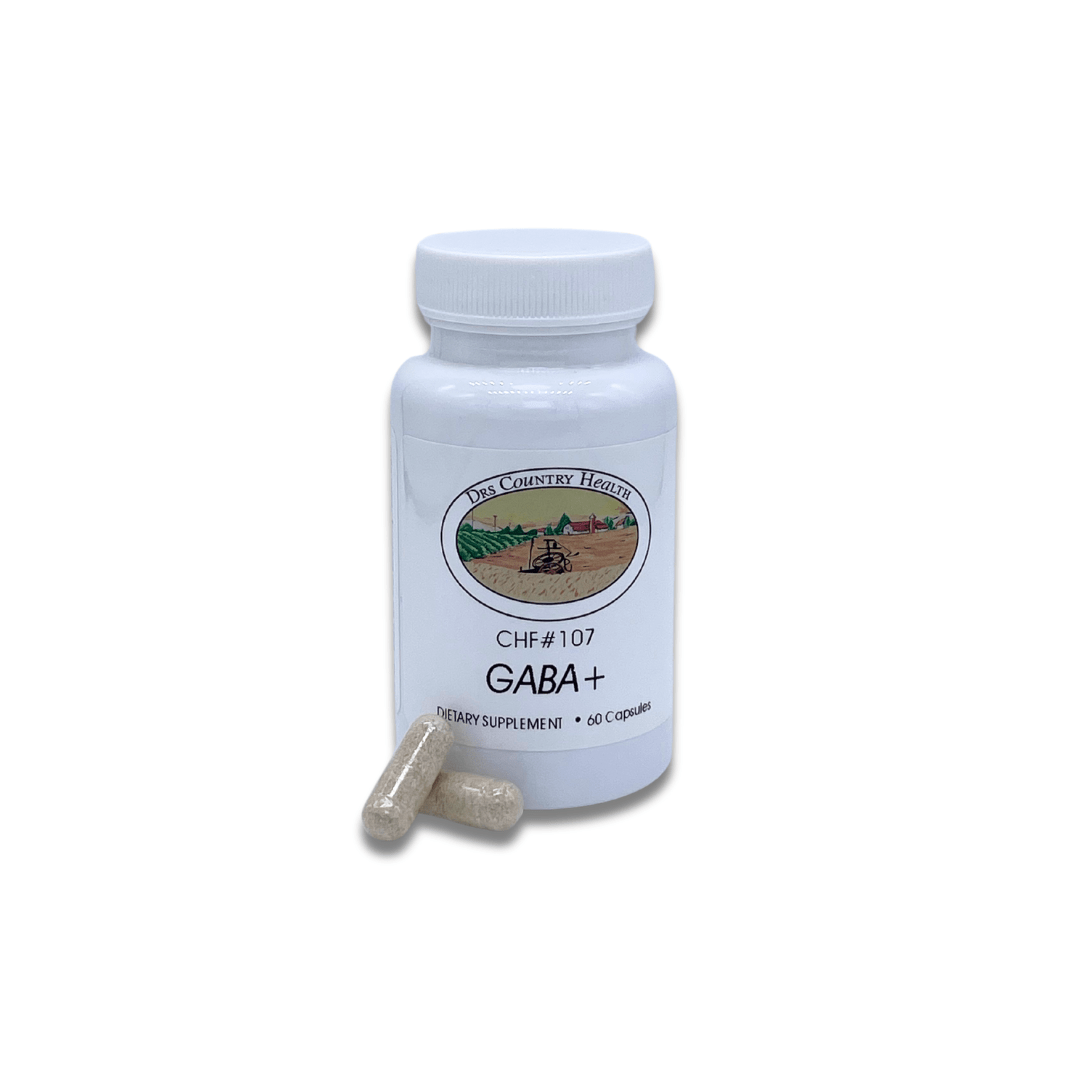
When the day runs hot, many people look for non-stimulant ingredients associated with calm focus and easier evenings. This article walks through each ingredient in CHF #107 GABA+ 60 Capsules and what research has found.
Full ingredient list (per capsule): GABA (gamma-aminobutyric acid) 600 mg; L-theanine 100 mg; and passionflower (Passiflora incarnata) 100 mg. Other ingredients: magnesium, silica, and a gelatin capsule. The label suggests one capsule daily.
GABA is the main inhibitory neurotransmitter in the human brain—the chemical signal that helps quiet excess excitatory activity. As a dietary supplement, GABA is used in formulas aimed at relaxation and stress support. A United States Pharmacopeia safety review (Oketch-Rabah and colleagues, 2021) evaluated clinical and toxicology data and found no serious adverse events associated with GABA at intakes up to 18 g per day for short periods and at 120 mg per day for 12 weeks in longer studies. Some studies noted a transient, moderate drop in blood pressure (under a 10% change).
CHF #107 provides 600 mg of GABA per capsule—a clear, labeled amount in the range people commonly use for daily calm-support routines.
L-theanine is an amino acid naturally concentrated in tea leaves. A 2020 systematic review of randomized trials (Williams and colleagues) concluded that supplemental L-theanine at 200–400 mg per day may assist in reducing stress and anxiety in people exposed to stressful conditions, while calling for larger long-term studies.
CHF #107 includes 100 mg of L-theanine alongside 600 mg of GABA. That L-theanine amount is a meaningful contribution toward the daily totals used in many trials, especially when tea or other theanine sources are already in the diet. Country Health pairs the two so the capsule offers both the primary inhibitory amino acid and tea’s signature calming amino acid.
Passionflower (Passiflora incarnata) has a long ethnobotanical history and is promoted today for anxiety, sleep, and stress. NCCIH reports that a small amount of research suggests oral passionflower might help reduce symptoms of anxiety, including anxiety before a surgical or dental procedure, though conclusions are not yet definitive. NCCIH also notes some research exploring sleep time in adults with insomnia.
Passionflower extract may be safe for daily use for up to about eight weeks in studied settings; possible side effects include drowsiness, dizziness, and confusion. CHF #107 includes 100 mg of passionflower with GABA and L-theanine for a three-ingredient calm-support capsule.
GABA occurs naturally in fermented foods such as yogurt, kefir, and tempeh, and in tea. L-theanine is especially abundant in green, black, and oolong tea. Passionflower is used as a tea and as an extract. CHF #107 concentrates complementary amounts of all three into one daily capsule for people who want a consistent labeled serving.
CHF #107 GABA+ stacks 600 mg GABA with 100 mg L-theanine and 100 mg passionflower—three ingredients people often seek for mental and physical calm. The once-daily capsule keeps the routine simple.
Who might enjoy it: adults looking for a non-stimulant evening or wind-down capsule, people who already like tea’s L-theanine effect and want a labeled dose, and anyone who prefers a short, transparent ingredient list focused on calm support.
Please check with your clinician first if you:
600 mg of GABA, plus 100 mg L-theanine and 100 mg passionflower, per capsule.
The label suggests one capsule daily; many people prefer evening use—follow your clinician’s advice.
Passionflower may cause drowsiness in some people. Learn how you respond before driving.
No. L-theanine is a separate tea amino acid often studied for calm focus; this formula does not list caffeine.
Add CHF #107 GABA+ to your cart or view the full product page and label.
This article is for general education only. It is not medical advice, and neither this article nor the product it discusses is meant to diagnose, treat, cure, or prevent any disease. Statements about dietary supplements have not been evaluated by the Food and Drug Administration. Talk with your doctor, pharmacist, or another qualified health professional before starting any supplement, especially if you are pregnant or breastfeeding, take prescription or over-the-counter medicines, or have a medical condition.