
By Jenn Resendiz
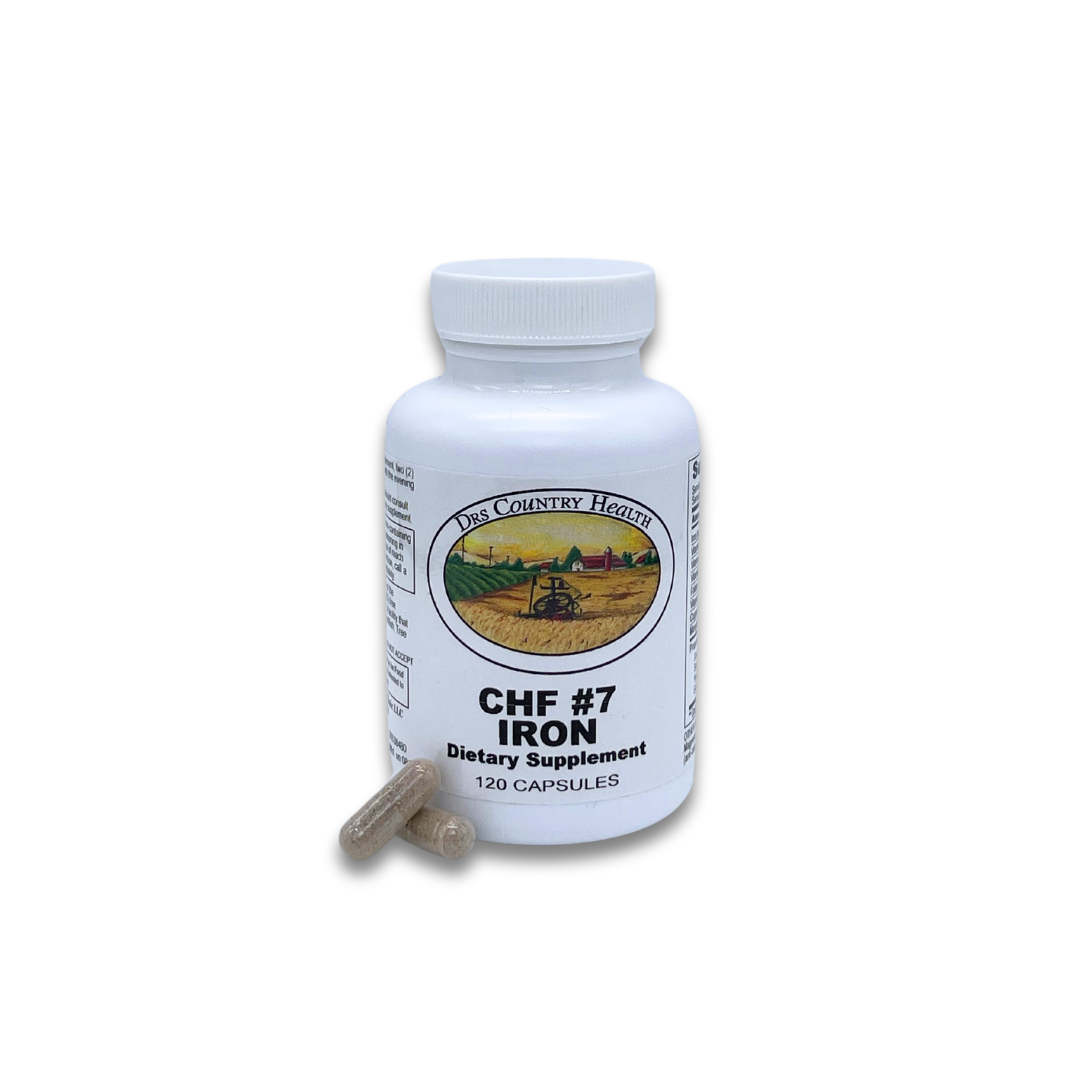
Everyday energy and healthy red blood cells depend on enough iron—and on nutrients that help the body use it well. This article walks through the featured ingredients in CHF #7 Iron—Country Health’s iron chelate with vitamin C and copper–B12–folate cofactors—and what NIH ODS reports about these nutrients.
Full ingredient list (per 2 capsules): Iron (chelate) 50 mg; vitamin C (calcium ascorbate) 40 mg; vitamin E (succinate) 6 mg; vitamin B6 (pyridoxine HCL) 440 mcg; folate (folic acid) 40 mcg; vitamin B12 (methylcobalamin) 9.6 mcg; copper (chelate) 250 mcg; manganese (chelate) 2.6 mg; proprietary blend 452 mg: dandelion root, betaine HCL, liver, fenugreek seed, barberry root bark, trace mineral blend, yellow dock root, burdock root, cayenne fruit, echinacea purpurea whole herb, raspberry leaf. Other ingredients: microcrystalline cellulose, magnesium stearate, silica, gelatin (capsule). Suggested use: two capsules with the morning meal and two capsules with the evening meal, or as directed. Supplied: 120 capsules. Label warning: accidental overdose of iron-containing products is a leading cause of fatal poisoning in children under 6—keep out of reach of children.
NIH ODS explains that iron is an essential component of hemoglobin, the red blood cell protein that transfers oxygen from the lungs to tissues, and of myoglobin, which supports muscle oxygen use. Iron is also necessary for physical growth, neurological development, cellular functioning, and the synthesis of some hormones. Adults who need more iron—such as many premenopausal women, pregnant women under clinician care, frequent blood donors, and people with low iron stores—often look for a labeled chelate capsule. CHF #7 provides 50 mg elemental iron (as chelate) per two-capsule serving, with a twice-daily mealtime schedule that spreads intake across the day.
Vitamin C improves the absorption of nonheme iron, the form present in plant foods and many supplements. NIH ODS notes that ascorbic acid enhances nonheme iron bioavailability and that mixed diets including vitamin C absorb iron more efficiently. CHF #7 includes 40 mg vitamin C as calcium ascorbate in the same serving, so adults get iron and its classic absorption partner in one Country Health formula rather than juggling separate bottles at mealtime.
Copper is a cofactor for enzymes involved in iron metabolism—NIH ODS highlights ceruloplasmin’s role in iron handling and notes that more than 95% of plasma copper in healthy people is carried on this cuproenzyme. Vitamin B12 is required for healthy red blood cell formation and DNA synthesis, and folate functions in nucleic acid synthesis and amino acid metabolism; both B vitamins are classic companions in formulas aimed at blood-building nutrition. CHF #7 supplies 250 mcg copper, 9.6 mcg methylcobalamin B12, and 40 mcg folate per two capsules, alongside a 452 mg herbal blend traditionally used in iron-support formulas.
CHF #7 centers a meaningful iron chelate dose with vitamin C for absorption support and copper, B12, and folate as complementary cofactors. The morning-and-evening meal schedule matches how many adults prefer to take iron with food to support comfort and consistency.
Who might enjoy it: adults whose clinician has identified a need for supplemental iron, people pairing iron with vitamin C in one bottle, and anyone whose provider agrees a chelated Country Health iron formula fits their lab-guided plan.
Please check with your clinician first if you:
No. Supplements are not FDA-approved to diagnose, treat, cure, or prevent disease. Iron deficiency and anemia should be evaluated by a clinician who can guide testing and dosing.
50 mg iron (chelate) and 40 mg vitamin C per two capsules, plus copper, B12, folate, and a 452 mg herbal blend.
The label suggests two capsules with the morning meal and two with the evening meal, or as directed by a qualified health professional. Keep the bottle away from children.
NIH ODS describes copper’s role in iron metabolism through cuproenzymes such as ceruloplasmin; the formula includes 250 mcg copper chelate per two capsules.
Add CHF #7 Iron to your cart or view the full product page and label.
This article is for general education only. It is not medical advice, and neither this article nor the product it discusses is meant to diagnose, treat, cure, or prevent any disease. Statements about dietary supplements have not been evaluated by the Food and Drug Administration. Talk with your doctor, pharmacist, or another qualified health professional before starting any supplement, especially if you are pregnant or breastfeeding, take prescription or over-the-counter medicines, or have a medical condition.