
By Jenn Resendiz
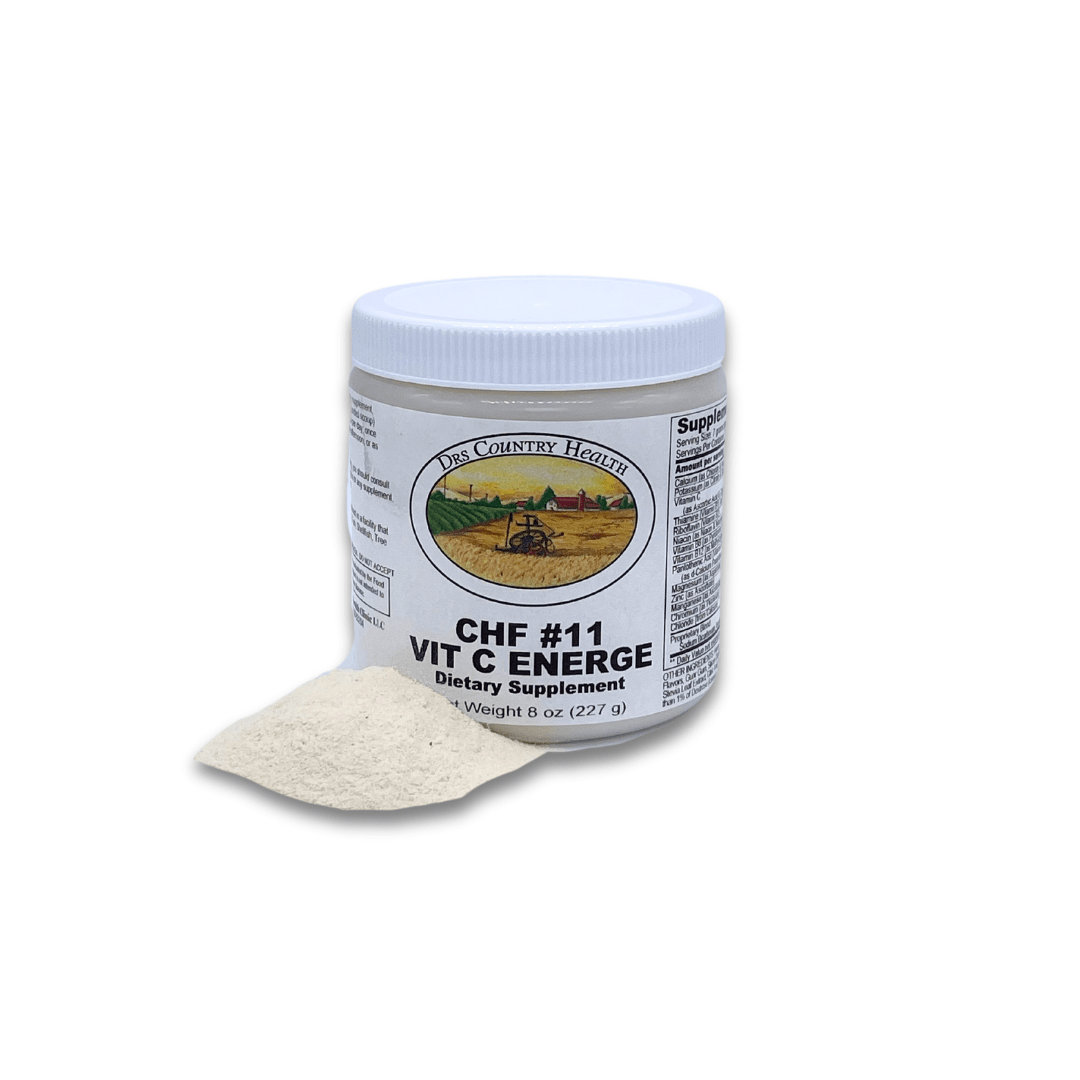
For people who would rather sip their vitamins than swallow capsules, a flavored drink mix can be an easy daily habit. This article walks through the featured ingredients in CHF #11 Vitamin C Energe Drink, Country Health’s buffered vitamin C powder with active-form vitamins B6 and B12 plus magnesium, and what NIH ODS reports about these nutrients.
Full ingredient list (per 7 g scoop): Vitamin C (as calcium ascorbate) 890 mg; calcium (as calcium ascorbate) 90 mg; thiamin (vitamin B1) 0.336 mg; riboflavin (vitamin B2 as R-5-P) 0.385 mg; niacin (as niacin and niacinamide) 4.5 mg NE; vitamin B6 (as P-5-P) 9 mg; vitamin B12 (as methylcobalamin) 22 mcg; pantothenic acid (d-calcium pantothenate) 2 mg; magnesium (as amino acid chelate) 49 mg; zinc (as amino acid chelate) 2 mg; manganese (as amino acid chelate) 1.5 mg; chromium (as picolinate) 9.8 mcg; sodium (as sodium bicarbonate) 68 mg; potassium (as citrate) 99 mg. Other ingredients: xylitol, citric acid, inositol, alpha lipoic acid, raspberry ketone, natural flavor, silica, stevia rebaudiana leaf extract, guar gum. Suggested use: mix one scoop with 4 ounces of water; take twice per day, once in the morning and once in the afternoon, or as directed. Drink slowly. Supplied: 32 servings (8 oz jar).
Vitamin C is a water-soluble vitamin that the body cannot make, so it must come from food or supplements. NIH ODS explains that it is required to make collagen, an essential component of connective tissue that plays a vital role in wound healing, as well as L-carnitine and certain neurotransmitters. It is also an important antioxidant that helps regenerate vitamin E, and it plays an important role in immune function. ODS adds that regular vitamin C supplementation might shorten the duration of the common cold and ease its symptoms.
ODS lists calcium ascorbate among the mineral ascorbate forms used in supplements. ODS also notes that the body absorbs about 70% to 90% of vitamin C at moderate intakes and tightly regulates its levels; the label’s morning-and-afternoon schedule, with 890 mg per scoop, spreads intake across the day. Citrus fruits, peppers, kiwifruit, broccoli, and strawberries are the classic food sources.
Vitamin B6 is a remarkably versatile vitamin. NIH ODS reports that its coenzyme forms take part in more than 100 enzyme reactions, mostly in protein metabolism. B6 also helps the body make neurotransmitters, maintain normal homocysteine levels, release stored glucose, form hemoglobin, and support immune function, including the production of lymphocytes. Pyridoxal 5′-phosphate (P-5-P), the form used in CHF #11, is one of the active coenzyme forms of the vitamin.
Fish, beef liver and other organ meats, potatoes and other starchy vegetables, chickpeas, and noncitrus fruits are rich food sources. Each scoop of CHF #11 provides 9 mg of vitamin B6.
NIH ODS explains that vitamin B12 is required for the development and function of the central nervous system, healthy red blood cell formation, and DNA synthesis. Methylcobalamin is one of the two metabolically active forms of B12 in the body. B12 occurs naturally only in animal foods such as fish, meat, poultry, eggs, and dairy, so ODS notes that vegans and vegetarians have a higher risk of running low and that fortified cereals and nutritional yeasts are useful sources. Each scoop of CHF #11 supplies 22 mcg of B12 as methylcobalamin.
Magnesium is a cofactor in more than 300 enzyme systems. NIH ODS notes that it is required for energy production, protein synthesis, and muscle and nerve function, and that green leafy vegetables, legumes, nuts, seeds, and whole grains are good sources. CHF #11 adds 49 mg of chelated magnesium per scoop, along with zinc, manganese, chromium, potassium, and sodium bicarbonate. Thiamin, riboflavin, niacin, and pantothenic acid round out the B-vitamin lineup.
CHF #11 centers a generous dose of buffered vitamin C, then layers in active-form B6 and B12, magnesium, and supporting minerals in a stevia- and xylitol-sweetened drink. Mixing a scoop into water twice a day makes it an easy way to keep these nutrients in a daily routine.
Who might enjoy it: adults who prefer a drink mix to capsules, people who want vitamin C with B vitamins and minerals in one glass, and anyone whose provider agrees a high-vitamin-C Country Health formula fits their plan.
Please check with your clinician first if you:
No. Supplements are not FDA-approved to diagnose, treat, cure, or prevent disease. Ongoing fatigue should be evaluated by a clinician.
One 7 g scoop provides 890 mg vitamin C as calcium ascorbate, plus 9 mg vitamin B6, 22 mcg vitamin B12, and 49 mg magnesium.
The label suggests one scoop in 4 ounces of water, taken in the morning and again in the afternoon, sipped slowly.
The other ingredients list xylitol and stevia leaf extract, with natural flavor and citric acid.
Add CHF #11 Vitamin C Energe Drink to your cart or view the full product page and label.
This article is for general education only. It is not medical advice, and neither this article nor the product it discusses is meant to diagnose, treat, cure, or prevent any disease. Statements about dietary supplements have not been evaluated by the Food and Drug Administration. Talk with your doctor, pharmacist, or another qualified health professional before starting any supplement, especially if you are pregnant or breastfeeding, take prescription or over-the-counter medicines, or have a medical condition.