
By Jenn Resendiz
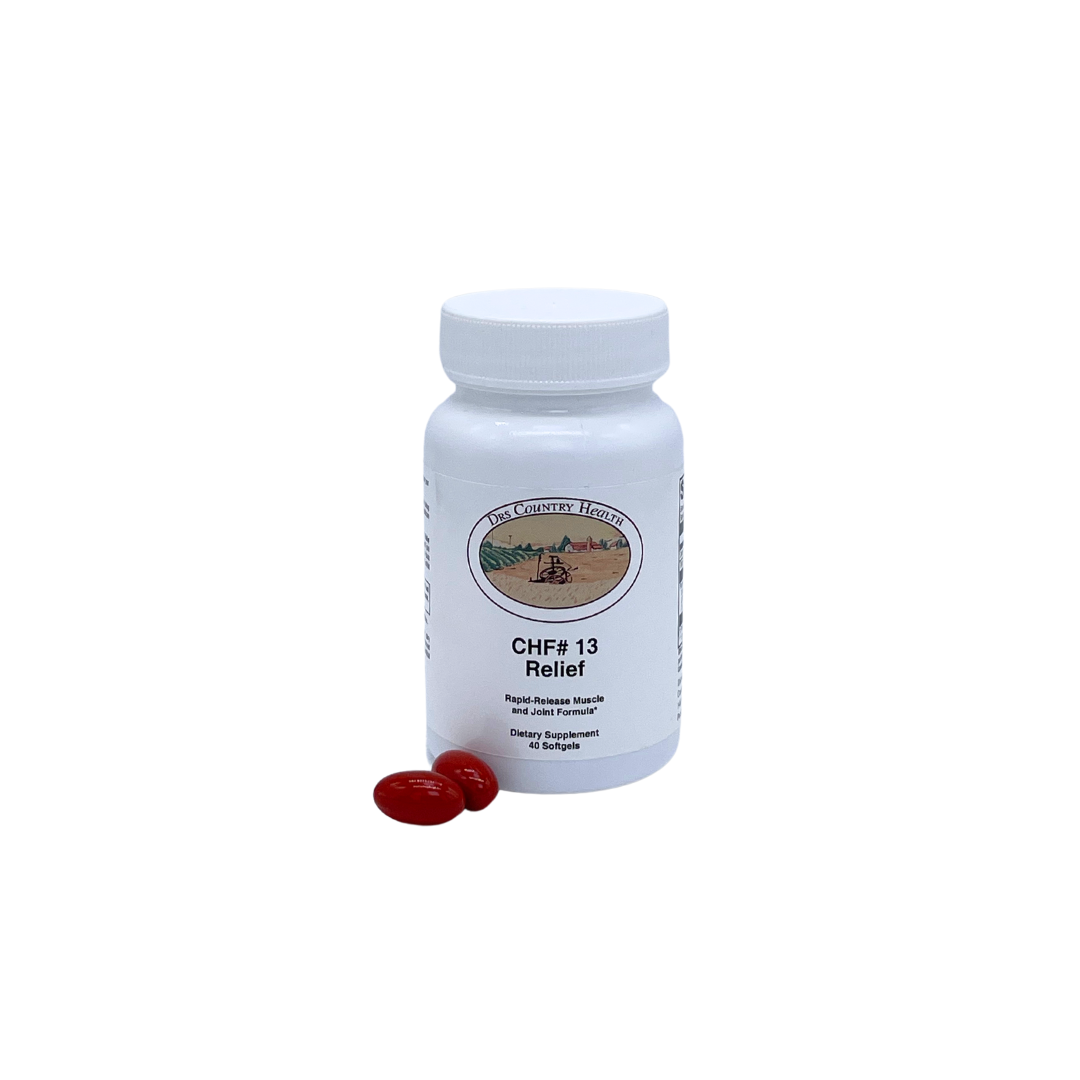
Many people look for botanical and mineral companions when everyday muscle tension, joint stiffness, or head discomfort shows up. This article walks through the featured ingredients in CHF #13 Relief 60 Capsules and what research organizations report about them.
Full ingredient list (per 2-capsule serving): Calcium (amino acid chelate) 100 mg (8% DV); Thiamin (vitamin B1) 6 mg (500% DV); Vitamin B6 (as P-5-P) 3 mg (176% DV); Folate (as L-methylfolate; 600 mcg L-methylfolate) 1020 mcg DFE (255% DV); Vitamin B12 (methylcobalamin) 44 mcg (1833% DV); Magnesium (amino acid chelate) 100 mg (24% DV); Potassium (citrate) 10 mg (<1% DV); and a proprietary blend 820 mg of white willow bark, wild lettuce leaf, devil’s claw root, German chamomile flower, feverfew aerial parts, wild yam root, valerian root, trace mineral complex, bromelain, papain, protease, amylase, cellulase, lactase, lipase, and Piper nigrum (black pepper) seed extract. Follow the product label or a qualified health professional for use directions.
White willow bark has been used for centuries for comfort related to everyday aches. NCCIH notes that the bark contains salicin, a compound historically linked to the development of aspirin, and that clinical research—while limited in size—has explored willow bark extracts for short-term low-back comfort and osteoarthritis-related support. A Cochrane review cited by NCCIH found moderate-quality evidence that daily white willow bark was probably better than placebo for short-term low-back pain improvements in the trials studied.
In CHF #13, white willow bark leads the 820 mg botanical-and-enzyme proprietary blend, sitting alongside other traditional comfort herbs rather than standing alone.
NCCIH summarizes that devil’s claw, an herb native to Africa, has moderate evidence for osteoarthritis support of the spine, hip, and knee, and may offer modest short-term benefits for low-back discomfort. Feverfew is promoted for migraine-related topics and minor head comfort; NCCIH reports that some research suggests feverfew may help reduce migraine frequency and related symptoms such as light sensitivity, though study results have been mixed.
CHF #13 also includes German chamomile flower, valerian root, wild yam, and wild lettuce—botanicals long used in traditional comfort and calm formulas—plus black pepper extract (piperine), which formulators often include to support nutrient absorption.
The NIH Office of Dietary Supplements explains that magnesium supports muscle and nerve function and energy production, while calcium supports muscle contraction and bone structure. CHF #13 provides 100 mg of each as amino acid chelates per two-capsule serving, plus 10 mg of potassium citrate.
Thiamin, vitamin B6 (as P-5-P), L-methylfolate, and methylcobalamin (B12) support energy metabolism and nervous-system biochemistry. ODS notes that B6 helps neurotransmitter pathways, folate and B12 support red blood cell formation and nervous system health, and thiamin is essential for carbohydrate energy metabolism. Food sources include whole grains, legumes, meat, fish, leafy greens, and fortified foods—yet many adults still appreciate a targeted capsule when they want these nutrients alongside botanicals.
The blend includes bromelain (from pineapple), papain (from papaya), and several digestive enzymes (protease, amylase, cellulase, lactase, lipase). NCCIH notes bromelain has been studied as an add-on for certain acute nasal and sinus inflammation settings. In this formula, the enzymes sit with the botanical comfort blend as supportive companions rather than as a separate digestive product.
CHF #13 pairs mineral and B-vitamin support with a multi-herb comfort blend led by white willow, devil’s claw, and feverfew, plus enzymes and a touch of black pepper extract. The pattern is a “nutrition-plus-botanicals” approach for adults who want Country Health’s take on everyday relief-minded ingredients in capsule form.
Who might enjoy it: adults seeking a botanical comfort formula with magnesium and B vitamins, people who prefer multi-ingredient Country Health capsules, and anyone whose clinician agrees that willow-bark-style botanicals fit their routine.
Please check with your clinician first if you:
No. Willow bark contains salicin and related compounds; aspirin is a purified drug. Do not treat willow bark as a substitute for prescribed medicine.
100 mg as an amino acid chelate (24% DV), plus 100 mg calcium and the B-vitamin complex listed above.
Individual herb amounts inside the 820 mg blend are not broken out on the label; they are listed together as a proprietary blend.
Talk with your clinician. Feverfew research is mixed, and this product combines many ingredients—follow professional guidance for migraine care.
Add CHF #13 Relief to your cart or view the full product page and label.
This article is for general education only. It is not medical advice, and neither this article nor the product it discusses is meant to diagnose, treat, cure, or prevent any disease. Statements about dietary supplements have not been evaluated by the Food and Drug Administration. Talk with your doctor, pharmacist, or another qualified health professional before starting any supplement, especially if you are pregnant or breastfeeding, take prescription or over-the-counter medicines, or have a medical condition.