
By Jenn Resendiz
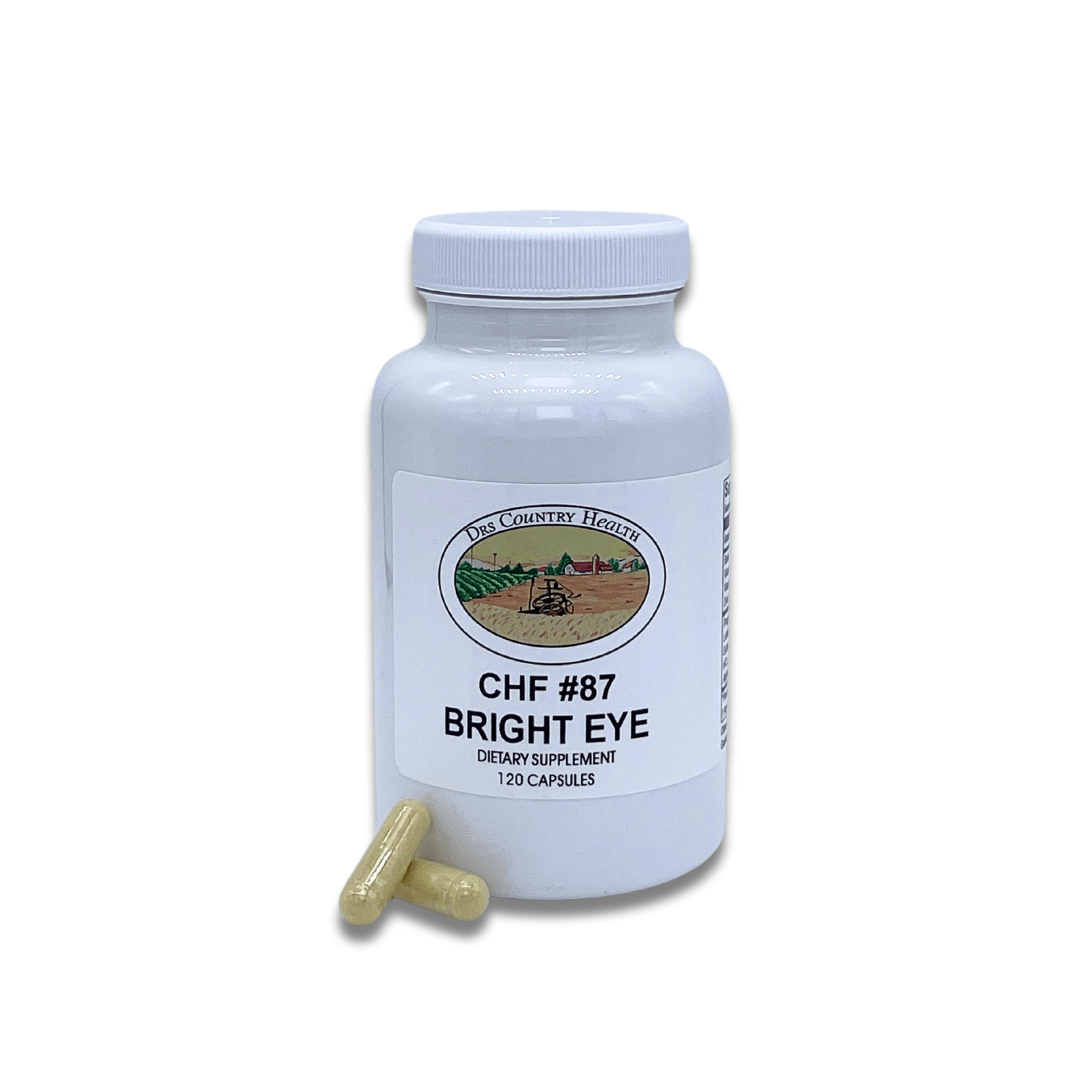
Eyes rely on a steady supply of antioxidants and carotenoids that concentrate in retinal tissue. This article walks through the featured nutrients in CHF #87 Bright Eye 120 Capsules and what NIH and National Eye Institute research says about them.
Full ingredient list (per 2-capsule serving): Vitamin A (as beta-carotene); Vitamin C (as calcium ascorbate) 100 mg (111% DV); Vitamin E (as succinate) 34 mg (227% DV); Zinc (amino acid chelate) 3 mg (27% DV); and a proprietary blend 1070 mg of lutein, L-taurine, N-acetyl-cysteine, quercetin, bilberry extract, Triphala extract, eyebright extract, L-glutamic acid HCL, lycopene, ginkgo biloba extract, eye substance, alpha lipoic acid, trace mineral blend, and zeaxanthin. Other ingredients: magnesium stearate, microcrystalline cellulose, silica, and a gelatin capsule. The label suggests 2 capsules twice daily, or as directed.
The NIH Office of Dietary Supplements explains that lutein and zeaxanthin are carotenoids that are not converted into vitamin A; instead, they accumulate in the retina. The National Eye Institute’s AREDS2 research found that a supplement pattern that includes lutein (10 mg) and zeaxanthin (2 mg)—along with vitamins C and E, zinc, and copper—can help slow progression from intermediate to advanced age-related macular degeneration (AMD) in people who already have intermediate AMD. Leafy greens such as kale and spinach are classic food sources of lutein and zeaxanthin.
CHF #87 includes lutein and zeaxanthin inside its 1070 mg proprietary blend alongside beta-carotene and antioxidant vitamins. The blend does not list milligram amounts for each carotenoid, so this formula is an everyday eye-support capsule inspired by that research tradition rather than a labeled AREDS2-dose product.
ODS notes that vitamin A is essential for normal vision—especially the retina’s ability to detect light—and for immune and reproductive health. Beta-carotene is a provitamin A carotenoid found in orange and dark-green produce; the body converts it to vitamin A as needed. CHF #87 provides its vitamin A as beta-carotene.
Vitamin C supports collagen and acts as a water-soluble antioxidant; vitamin E is a fat-soluble antioxidant that helps protect cell membranes. ODS and NEI both highlight vitamins C and E as part of the researched AREDS-style nutrient pattern for people with intermediate AMD. Each two-capsule serving of Bright Eye supplies 100 mg vitamin C and 34 mg vitamin E.
ODS reports that the retina has a high zinc concentration and that zinc-containing antioxidant formulas studied in AREDS helped slow progression of AMD among people at high risk of advanced disease. Oysters, meat, legumes, and fortified cereals are common food sources. Adults generally need 8–11 mg of zinc daily. CHF #87 includes 3 mg of chelated zinc (27% DV) as part of its eye-focused micronutrient core.
Beyond lutein and zeaxanthin, the blend includes bilberry extract (a traditional European berry rich in anthocyanins), Triphala (an Ayurvedic three-fruit combination), eyebright, lycopene, taurine, N-acetyl-cysteine, quercetin, ginkgo, alpha-lipoic acid, and related supportive compounds. These botanicals and amino acids are familiar companions in eye-nutrition formulas and add plant pigments and thiol antioxidants alongside the primary vitamins and minerals.
CHF #87 centers on macular carotenoids and classic eye antioxidants (vitamins C and E, zinc, beta-carotene) and surrounds them with bilberry, Triphala, and related botanicals. Split dosing (2 capsules twice daily) matches the label’s suggestion for consistent daily use.
Who might enjoy it: adults who want a Country Health eye-nutrition capsule with lutein and zeaxanthin listed among the ingredients, people who eat fewer leafy greens than they would like, and anyone whose eye-care professional agrees that carotenoid-rich supplements fit their plan. If you have diagnosed AMD, ask whether a full AREDS2-dose product is more appropriate for you.
Please check with your clinician first if you:
No. AREDS2 products list exact high doses (for example, 10 mg lutein and 2 mg zeaxanthin plus higher zinc). Bright Eye includes related nutrients in a proprietary blend and lower labeled zinc; it is a broader eye-support formula.
The label suggests 2 capsules twice daily, or as directed by a qualified health professional.
Beta-carotene is a dietary source of vitamin A activity important for vision; ODS explains the body converts it as needed. Food sources include carrots, sweet potatoes, and leafy greens.
No. Regular dilated eye exams remain essential for monitoring eye health.
Add CHF #87 Bright Eye to your cart or view the full product page and label.
This article is for general education only. It is not medical advice, and neither this article nor the product it discusses is meant to diagnose, treat, cure, or prevent any disease. Statements about dietary supplements have not been evaluated by the Food and Drug Administration. Talk with your doctor, pharmacist, or another qualified health professional before starting any supplement, especially if you are pregnant or breastfeeding, take prescription or over-the-counter medicines, or have a medical condition.