
By Jenn Resendiz
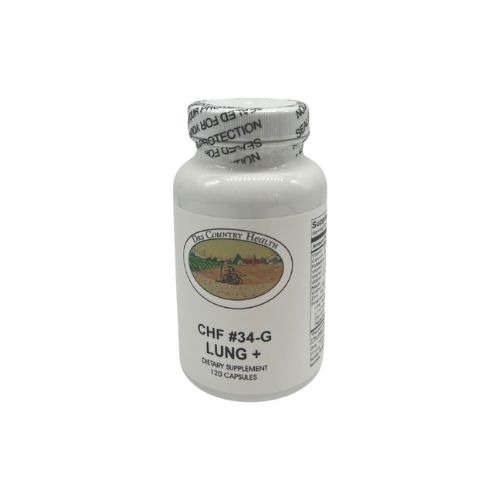
Everyday lung nutrition starts with the vitamins that support airway-lining tissues and antioxidant defenses. This article walks through the featured ingredients in CHF #34 Lung+ 120 Capsules—and what NIH ODS and NCCIH report about vitamins A, C, and E, garlic, and echinacea.
Full ingredient list (per 1-capsule serving): Vitamin D (as cholecalciferol) 6.7 mcg (34% DV); Calcium (as ascorbate & chelate) 8 mg (1% DV); Potassium (as amino acid complex) 1 mg (<1% DV); Vitamin A (as palmitate) 1 mg (111% DV); Vitamin C (as calcium ascorbate) 41 mg (46% DV); Vitamin E (as succinate) 24 mg (160% DV); Niacin 9 mg NE (56% DV); Vitamin B6 (as pyridoxine HCl) 5 mg (265% DV); Zinc (as chelate) 1 mg (4% DV); and a proprietary blend 364 mg of lung substance, garlic bulb, white willow bark, lecithin (from sunflower), liverwort leaf, lungwort aerial parts, citrus bioflavonoids, cayenne fruit, echinacea purpurea root, horehound aerial parts, pleurisy root, slippery elm bark, pine bark, black (wild) cherry bark, and a trace mineral blend. Other ingredients: gelatin (capsule), maltodextrin, cellulose, magnesium silicate, and may contain small amounts of carriers. Suggested use: one capsule daily, or as directed.
ODS describes vitamin A as critical for the normal formation and maintenance of the lungs and other organs, and for immune function and cell growth. CHF #34 provides 1 mg vitamin A as palmitate per capsule (111% DV). Vitamin C (41 mg) supports collagen synthesis, antioxidant activity, and immune function; ODS notes regular intakes of at least about 200 mg/day from all sources may modestly shorten cold duration in the general population, though prophylactic vitamin C does not clearly prevent colds for most people. Vitamin E (24 mg, 160% DV) is a fat-soluble antioxidant that helps protect lipids from oxidative damage. Together these three vitamins form the quantified antioxidant backbone of the formula.
NCCIH reports that garlic supplements may modestly lower total and LDL cholesterol in people with high cholesterol and may slightly reduce blood pressure in those with hypertension; immune claims for cold season have very limited evidence. Garlic bulb appears early in the 364 mg blend alongside traditional respiratory botanicals.
NCCIH also notes that taking echinacea may slightly reduce the chance of catching a cold, while evidence that it shortens colds is still unclear. Short-term oral use of E. purpurea extracts is likely safe for most adults; allergic reactions can occur. CHF #34 includes echinacea purpurea root within the proprietary blend rather than as a standalone high-dose extract.
Lungwort, horehound, pleurisy root, slippery elm bark, wild cherry bark, pine bark, liverwort, cayenne, white willow, citrus bioflavonoids, sunflower lecithin, and bovine lung substance reflect a classic European-American herbal lung tradition. Niacin, vitamin B6, vitamin D, zinc, calcium, and potassium provide micronutrient support around that botanical core.
CHF #34 pairs quantified vitamins A, C, and E with a 364 mg lung-botanical-and-glandular blend in a once-daily capsule. The 120-capsule bottle suits adults who want Country Health’s multi-ingredient lung nutrition rather than a single-herb tea or lozenge.
Who might enjoy it: adults seeking vitamin A/C/E-forward airway nutrition with garlic and echinacea companions, and anyone whose clinician agrees a lung-support capsule fits their wellness routine.
Please check with your clinician first if you:
No. Dietary supplements are not FDA-approved to diagnose, treat, cure, or prevent disease.
1 mg as palmitate (111% DV), plus vitamins C and E at 41 mg and 24 mg.
The label suggests one capsule daily, or as directed by a qualified health professional.
Add CHF #34 Lung+ to your cart or view the full product page and label.
This article is for general education only. It is not medical advice, and neither this article nor the product it discusses is meant to diagnose, treat, cure, or prevent any disease. Statements about dietary supplements have not been evaluated by the Food and Drug Administration. Talk with your doctor, pharmacist, or another qualified health professional before starting any supplement, especially if you are pregnant or breastfeeding, take prescription or over-the-counter medicines, or have a medical condition.