
By Jenn Resendiz
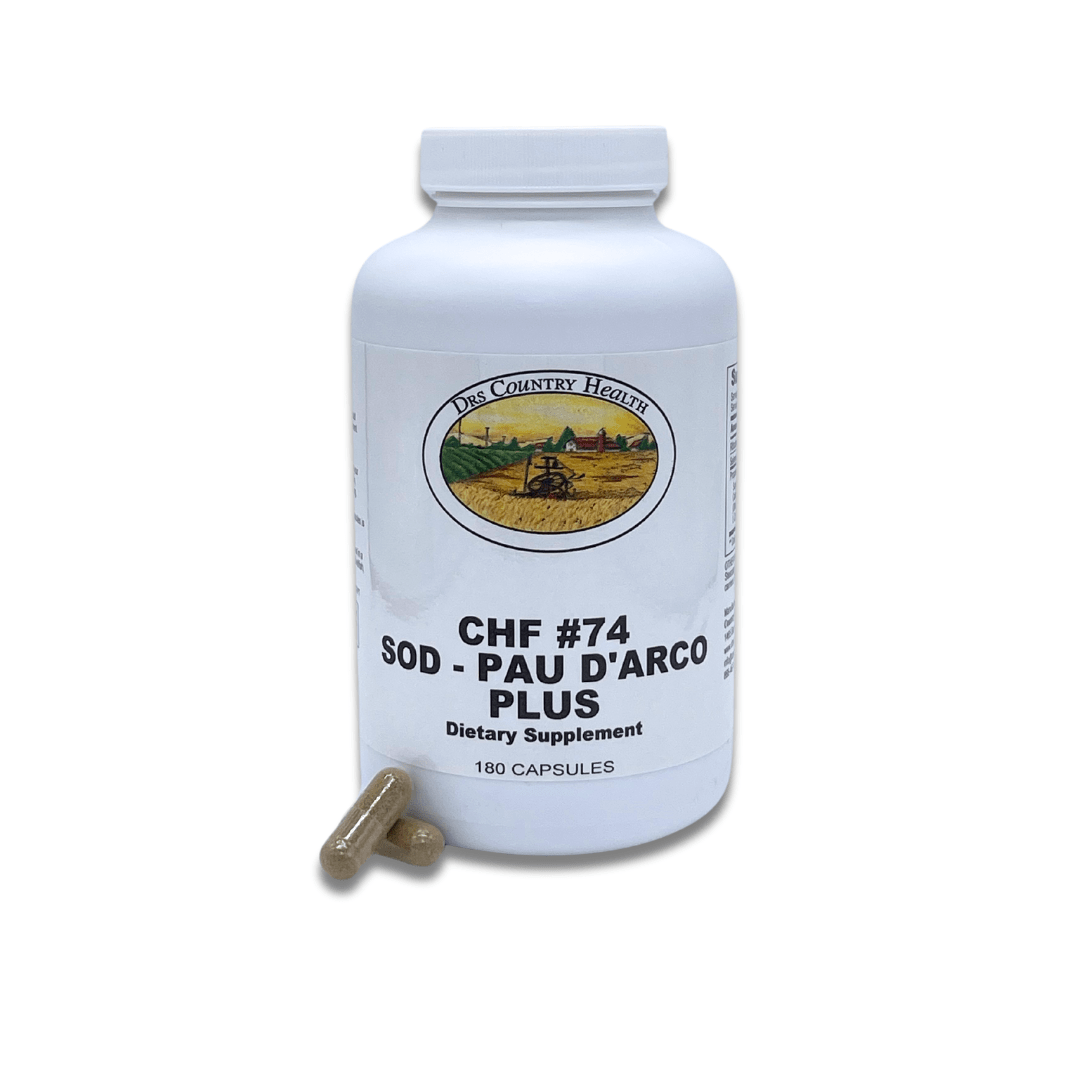
Antioxidant enzyme companions such as superoxide dismutase (SOD), catalase, and glutathione are often paired with selenium and CoQ10 in advanced wellness formulas. This article walks through the featured ingredients in CHF #74 SOD-Pau D’Arco Plus 180 Capsules—and what NIH ODS and NCCIH report about selenium, CoQ10, and related nutrients.
Full ingredient list (per 2-capsule serving): Riboflavin (vitamin B2 as R-5-P) 2.6 mg (200% DV); Selenium (as chelate) 204 mcg (371% DV); and a proprietary blend 1.5 g of superoxide dismutase (SOD), pau d’arco bark, catalase, bee pollen, NN dimethylglycine HCl (DMG), ginkgo biloba leaf, CoEnzyme Q10, L-cysteine HCl, and L-glutathione. Other ingredients: microcrystalline cellulose, magnesium stearate, silica, gelatin (capsule). Suggested use: two capsules daily with eight ounces of water, or as directed.
ODS explains that selenium is a constituent of 25 selenoproteins, including glutathione peroxidases that help protect cells from oxidative damage. Adult RDAs are about 55 mcg/day; the UL is 400 mcg/day from food and supplements combined. CHF #74 provides 204 mcg selenium as a chelate per two capsules (371% DV)—a substantial but below-UL amount that supports the formula’s glutathione-and-catalase theme. Most people in the United States already meet selenium needs from food; this capsule is for adults whose clinician agrees supplemental selenium fits their plan.
Superoxide dismutase and catalase are enzymes that help convert reactive oxygen species into less reactive forms as part of normal cellular antioxidant networks. Oral SOD and catalase appear in specialty supplements as companion enzymes; the body also makes these enzymes endogenously. L-glutathione and L-cysteine (a glutathione building block) extend that antioxidant-amino theme inside the 1.5 g blend.
NCCIH notes CoQ10 is concentrated in heart, liver, kidney, and pancreas tissue and participates in mitochondrial energy pathways. Evidence for preventing heart disease is inconclusive; CoQ10 may help reduce certain heart-surgery complications. Mild digestive upset or insomnia can occur, and interactions with warfarin and insulin are possible.
Pau d’arco (the inner bark of Tabebuia species, also called lapacho or taheebo) has a long South American traditional use history and leads the botanical side of this blend beside SOD. Ginkgo biloba leaf is a widely studied botanical for cognitive and circulation topics in other contexts; here it appears as one component of the multi-ingredient blend. Bee pollen and DMG (dimethylglycine) are classic Country Health companions. Riboflavin at 2.6 mg (200% DV) supports flavoprotein enzymes involved in energy metabolism.
Taken together, selenium, riboflavin, SOD, catalase, glutathione, CoQ10, and pau d’arco create Country Health’s antioxidant-enzyme style formula for adults who want more than a single-nutrient capsule.
CHF #74 pairs quantified selenium and riboflavin with a 1.5 g SOD–pau d’arco–catalase–glutathione–CoQ10 blend. The 180-capsule bottle (ninety two-capsule servings) is built for adults who want Country Health’s antioxidant-enzyme formula rather than selenium or CoQ10 alone.
Who might enjoy it: adults seeking selenium-forward antioxidant nutrition with SOD, catalase, glutathione, and pau d’arco, and anyone whose clinician agrees this specialty blend fits their wellness routine.
Please check with your clinician first if you:
No. Dietary supplements are not FDA-approved to diagnose, treat, cure, or prevent disease.
204 mcg as a chelate (371% DV), plus a 1.5 g proprietary antioxidant-enzyme blend.
The label suggests two capsules daily with eight ounces of water, or as directed by a qualified health professional.
Add CHF #74 SOD-Pau D’Arco Plus to your cart or view the full product page and label.
This article is for general education only. It is not medical advice, and neither this article nor the product it discusses is meant to diagnose, treat, cure, or prevent any disease. Statements about dietary supplements have not been evaluated by the Food and Drug Administration. Talk with your doctor, pharmacist, or another qualified health professional before starting any supplement, especially if you are pregnant or breastfeeding, take prescription or over-the-counter medicines, or have a medical condition.