
By Jenn Resendiz
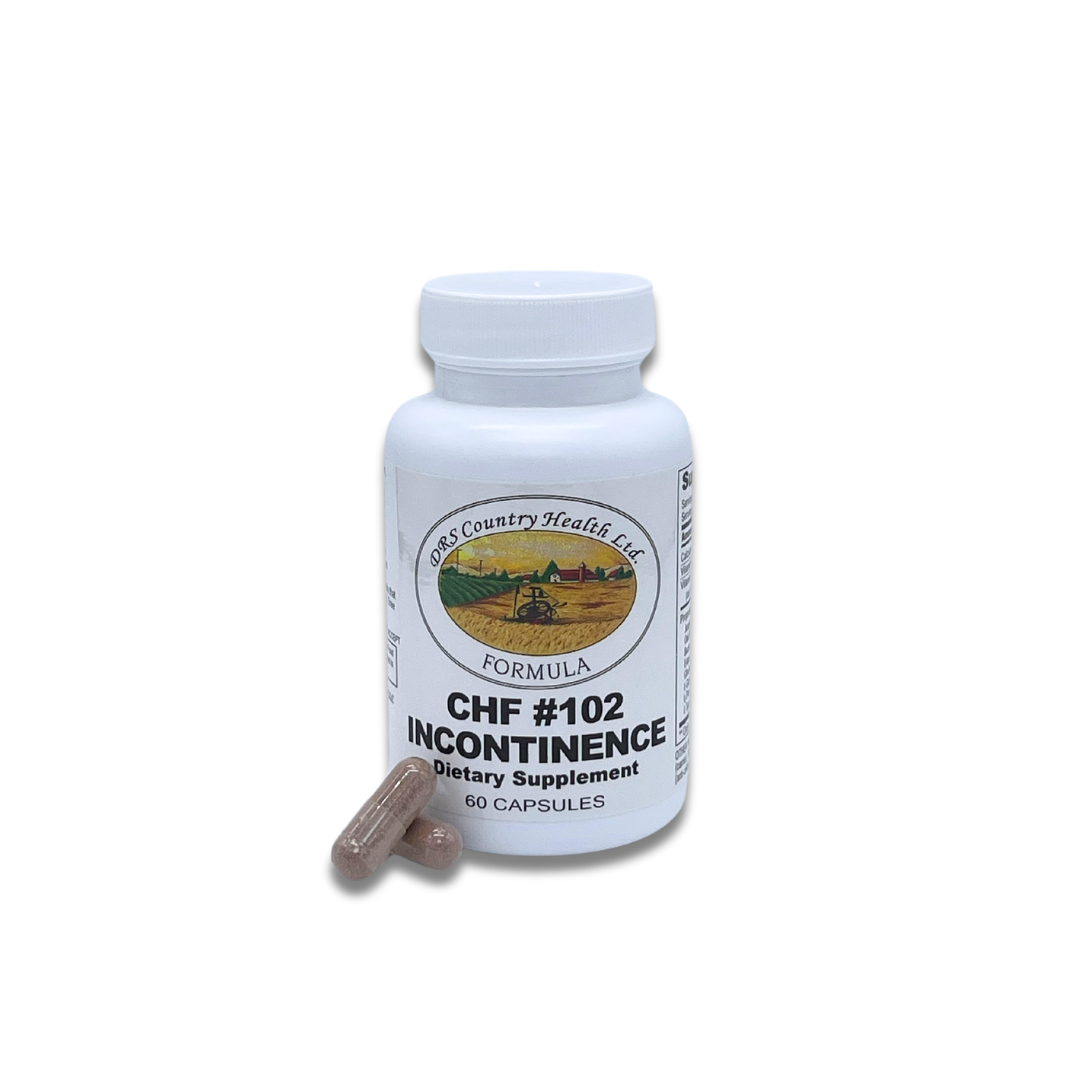
Bladder comfort is something many adults think about but rarely discuss. Herbalists have long turned to cranberry, bearberry, and soothing marshmallow root for urinary-tract wellness. This article explores the featured ingredients in CHF #102 Incontinence, a one-capsule-a-day Country Health formula that brings together cranberry fruit extract, uva ursi, marshmallow root, butcher’s broom, buchu, and juniper with vitamins C and E and a full amino acid blend.
Full ingredient list (per capsule): Calcium (as ascorbate) 13 mg; vitamin C (as calcium ascorbate) 87 mg; vitamin E (as d-alpha tocopheryl succinate) 2 mg; proprietary blend 674 mg of juniper berry, cranberry fruit extract, parsley leaf, white oak bark, marshmallow root, butcher’s broom root extract, buchu leaf extract, uva ursi leaf extract, ginger root extract, and the amino acids L-alanine, L-arginine HCl, L-aspartic acid, L-citrulline, L-cysteine HCl, glycine, L-glutamic acid HCl, L-glutamine, L-histidine HCl, L-lysine HCl, L-methionine, L-phenylalanine, L-proline, L-serine, taurine, L-threonine, L-tyrosine, and L-valine. Other ingredients: gelatin (capsule), maltodextrin, magnesium stearate, silicon dioxide. Suggested use: one capsule daily or as directed. Supplied: 60 capsules.
Cranberry is an evergreen shrub native to North America, and NCCIH notes that Native Americans and European settlers used its fruit in food and medicine. Today, cranberry is one of the most researched botanicals for the urinary tract. A 2023 Cochrane review of 50 studies with nearly 8,900 participants found, with moderate-certainty evidence, that cranberry products reduced the risk of symptomatic urinary tract infections compared with placebo or no treatment.
Researchers credit cranberry’s proanthocyanidins (PACs), which the Cochrane authors explain inhibit the adherence of certain E. coli bacteria to the cells lining the bladder. NCCIH adds that cranberry taken by mouth is generally thought to be safe. Fresh and dried cranberries and unsweetened cranberry juice are food sources.
Uva ursi leaf is one of Europe’s best-known traditional bladder herbs. NIH’s LactMed database notes that the leaves contain arbutin, which is converted to hydroquinone, and that uva ursi is most often used as a urinary antiseptic. The European Medicines Agency’s herbal committee concluded that, based on long-standing use, bearberry leaf preparations can be used for symptoms of mild, recurrent lower urinary tract complaints in adult women, such as burning or frequent urination, once a doctor has ruled out serious conditions.
Marshmallow root (Althaea officinalis) has a long reputation as a soothing herb. The European Medicines Agency recognizes marshmallow root, on the basis of long-standing use, for irritation of the mouth or throat with associated dry cough and for relief of mild stomach and gut discomfort. Herbalists often add it to bladder formulas for that same gentle, soothing character.
Butcher’s broom root is a traditional circulation herb. The EMA’s herbal committee concluded that, based on long-standing use, butcher’s broom preparations can relieve discomfort and heaviness of the legs related to minor circulation problems; in one study the committee reviewed, foot and lower-leg swelling decreased more in women taking butcher’s broom than placebo.
Buchu is a fragrant South African shrub. A 2022 review in Frontiers in Pharmacology describes its traditional use for urinary-tract ailments, which made it a popular American remedy in the 19th century, and reports antioxidant and anti-inflammatory activity in laboratory studies. Juniper berry, according to a 2022 review in the International Journal of Molecular Sciences, is traditionally used for bladder complaints and is rich in phenolics and terpenoids. Parsley leaf, white oak bark, and ginger complete the herbal side of the blend.
NIH’s Office of Dietary Supplements (ODS) explains that vitamin C is needed to make collagen, the main structural protein of connective tissue, and is an important antioxidant that helps regenerate vitamin E. Vitamin E is a fat-soluble antioxidant; nuts, seeds, and vegetable oils are among its best food sources. Each capsule provides 87 mg of vitamin C and 2 mg of vitamin E. The amino acid blend supplies a broad range of protein building blocks, including glycine, glutamine, and taurine.
CHF #102 combines cranberry, the most-studied urinary botanical, with traditional bladder herbs such as uva ursi, buchu, and juniper, a soothing touch of marshmallow root, and antioxidant vitamins, all in a single daily capsule.
Who might consider it: adults looking for herbal support for urinary-tract wellness and bladder comfort as part of healthy habits such as pelvic floor exercise, good hydration, and regular checkups, and people whose provider agrees this Country Health formula fits their plan. MedlinePlus notes that urinary incontinence is a common condition that can get better with proper treatment, so a provider is a great partner in finding the right approach.
No. Dietary supplements are not intended to diagnose, treat, cure, or prevent disease, and NCCIH advises against using cranberry instead of proven treatment for a urinary infection.
The label suggests one capsule daily or as directed by a health professional.
The herbs and amino acids are combined in a 674 mg proprietary blend, so individual amounts are not listed.
Add CHF #102 Incontinence to your cart or view the full product page and label.
This article is for general education only. It is not medical advice, and neither this article nor the product it discusses is meant to diagnose, treat, cure, or prevent any disease. Statements about dietary supplements have not been evaluated by the Food and Drug Administration. Talk with your doctor, pharmacist, or another qualified health professional before starting any supplement, especially if you are pregnant or breastfeeding, take prescription or over-the-counter medicines, or have a medical condition.