
By Jenn Resendiz
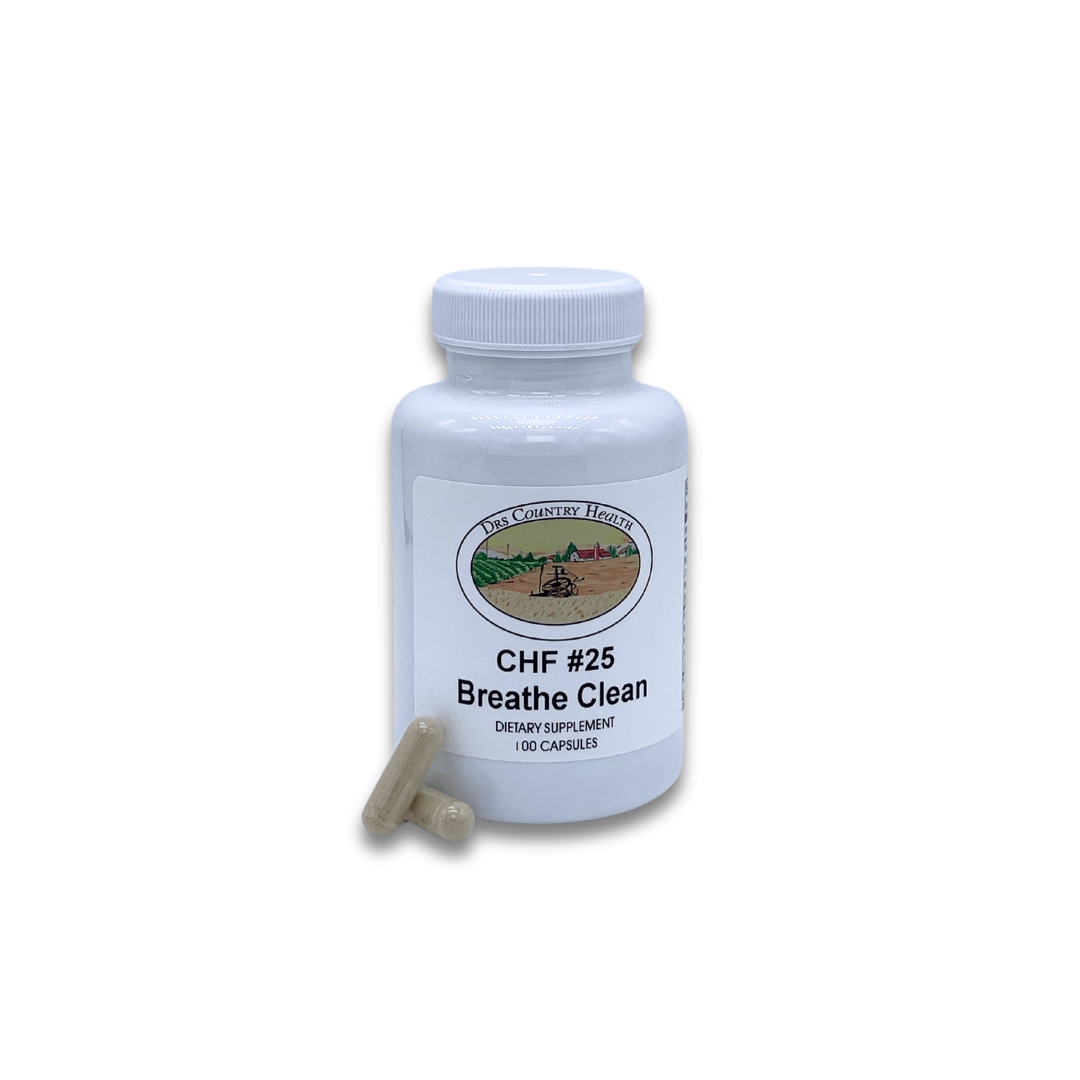
Pollen season sends many people looking for nutrients and botanicals that help them feel clear and comfortable. This article walks through the featured ingredients in CHF #25 Breathe Clean, Country Health’s butterbur, vitamin C, and zinc capsule with stinging nettle and rose hips, and what NCCIH, NIH ODS, and peer-reviewed studies report about them.
Full ingredient list (per 2 capsules): Vitamin A (as beta carotene) 900 mcg RAE (3,000 IU); vitamin C (as rose hips fruit and calcium ascorbate) 90 mg; calcium (as montmorillonite and calcium ascorbate) 50 mg; magnesium (as montmorillonite and trace minerals) 10 mg; zinc (as amino acid chelate) 15 mg; proprietary blend 875 mg: montmorillonite, Petasites hybridus (butterbur) root (PA free), citrus bioflavonoid complex, Rosa canina (rose hip) fruit, Urtica dioica (nettle) leaf, Allium sativum (garlic) bulb, sea mineral complex, lemon peel oil. Other ingredients: magnesium stearate, gelatin (capsule). Suggested use: two capsules three times daily, or as directed. Supplied: 100 capsules.
Butterbur (Petasites hybridus) is a shrub that grows in Europe and parts of Asia and North America. Its name comes from the old practice of wrapping butter in its broad leaves, and NCCIH notes it has been used for health purposes for centuries. Today butterbur is studied mainly for migraine and seasonal allergic rhinitis (hay fever), and NCCIH reports that studies of a butterbur extract suggest it may be helpful for hay fever symptoms when taken by mouth.
Clinical trials add detail. In a randomized, double-blind study of 330 people with intermittent allergic rhinitis, a butterbur extract (Ze 339) and the antihistamine fexofenadine were each significantly better than placebo at improving daytime symptoms, with no difference between the two active treatments. A 2024 meta-analysis of medicinal plants for allergic rhinitis, in which butterbur was the most studied, found they may improve overall nasal symptoms, especially congestion and sneezing. CHF #25 uses butterbur root that the label identifies as PA free, the processed form NCCIH says should be chosen.
Vitamin C is a water-soluble vitamin and an important antioxidant. NIH ODS explains that it plays an important role in immune function, helps regenerate other antioxidants such as vitamin E, and is required to make collagen for healthy connective tissue. ODS also summarizes research on the common cold: regular vitamin C intake might shorten how long a cold lasts and ease symptom severity in the general population, and intakes of at least 200 mg per day may be especially helpful for people exposed to intense exercise or cold environments or with marginal vitamin C status.
The best food sources are citrus fruits, red and green peppers, kiwifruit, broccoli, strawberries, and Brussels sprouts. CHF #25 delivers 90 mg of vitamin C per two capsules from rose hips and calcium ascorbate, alongside a citrus bioflavonoid complex.
Zinc is an essential mineral needed for the activity of hundreds of enzymes. NIH ODS describes its role in immune function, protein and DNA synthesis, wound healing, and cell signaling. In cold research reviewed by ODS, a 2021 meta-analysis of 28 trials found that zinc appears to reduce the duration of the common cold, with most studies using lozenges started soon after symptoms began.
Oysters are the richest food source, and meat, seafood, beans, nuts, and whole grains also contribute. CHF #25 provides 15 mg of zinc as an amino acid chelate per two capsules.
Stinging nettle (Urtica dioica) is an edible wild plant. A 2022 review describes nettle leaf as rich in fiber, minerals, vitamins, polyphenols, and carotenoids, and notes its traditional use for allergic rhinitis. In an early randomized, double-blind study of 98 people with allergic rhinitis, a freeze-dried nettle preparation was rated higher than placebo in global assessments after one week.
Vitamin A rounds out the formula. NIH ODS explains that vitamin A is involved in immune function and vision, and that the body converts provitamin A carotenoids such as beta carotene (found in carrots, sweet potatoes, and leafy greens) into vitamin A. CHF #25 supplies 900 mcg RAE (100% of the Daily Value) as beta carotene per two capsules.
CHF #25 pairs butterbur, the most frequently studied single herb in the 2024 hay fever meta-analysis, with the immune-supporting nutrients vitamin C, zinc, and beta carotene, plus nettle leaf, rose hips, garlic, and bioflavonoids.
Who might enjoy it: adults who want a butterbur-based Country Health formula during pollen season, people who prefer getting vitamin C and zinc together in one capsule, and anyone whose provider agrees a PA-free butterbur product fits their plan.
Please check with your clinician first if you:
No. Supplements are not FDA-approved to diagnose, treat, cure, or prevent disease. Allergy and breathing symptoms should be evaluated by a clinician.
Yes. The label lists Petasites hybridus root as PA free, the form NCCIH recommends choosing.
The label suggests two capsules three times daily, or as directed by a qualified health professional.
Add CHF #25 Breathe Clean to your cart or view the full product page and label.
This article is for general education only. It is not medical advice, and neither this article nor the product it discusses is meant to diagnose, treat, cure, or prevent any disease. Statements about dietary supplements have not been evaluated by the Food and Drug Administration. Talk with your doctor, pharmacist, or another qualified health professional before starting any supplement, especially if you are pregnant or breastfeeding, take prescription or over-the-counter medicines, or have a medical condition.