
By Jenn Resendiz
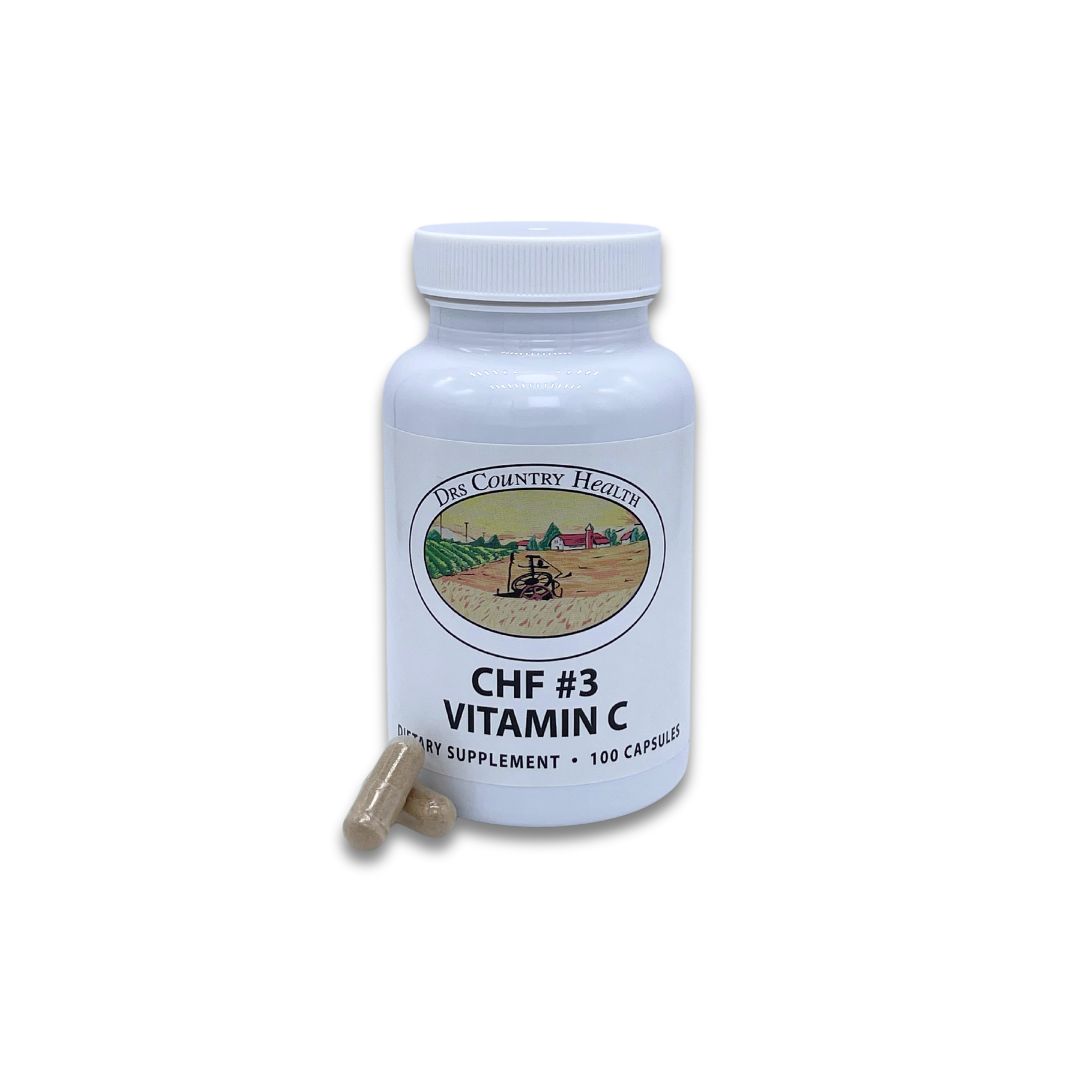
Vitamin C is one of the best-studied nutrients there is, and it does a remarkable amount of work in the body. This article walks through each ingredient in CHF #3 Vitamin C 100 Capsules and what research has found about it.
Full ingredient list (per 3 capsules): Vitamin C 880 mg (as calcium ascorbate, acerola fruit extract, and rose hips fruit); calcium 100 mg (as calcium ascorbate); and a 713 mg proprietary blend of citrus bioflavonoid complex, rutin, hesperidin, bentonite, alfalfa (leaf and stem), dandelion root, and parsley leaf. Other ingredients: microcrystalline cellulose, magnesium stearate, and a gelatin capsule. The label suggests three capsules daily.
Vitamin C is a water-soluble vitamin that people cannot make, so it has to come from food or supplements. The NIH Office of Dietary Supplements (ODS) explains that the body needs it to make collagen, L-carnitine, and certain neurotransmitters. Collagen is an essential part of connective tissue and plays a vital role in wound healing. Vitamin C is also an important antioxidant that helps regenerate other antioxidants, including vitamin E, and it plays a role in immune function.
Vitamin C also helps you get more from plant foods: ODS notes that it improves absorption of nonheme iron, the form of iron in beans, grains, and leafy greens. Adults need 75 to 90 mg a day, and people who smoke need 35 mg more. Citrus, peppers, kiwifruit, broccoli, strawberries, and Brussels sprouts are excellent food sources. A three-capsule serving of CHF #3 provides 880 mg.
A 2013 Cochrane review of placebo-controlled trials found that people who took at least 200 mg of vitamin C every day had shorter colds, about 8% shorter in adults and 14% shorter in children, and their colds were somewhat less severe. In five trials of people under heavy physical stress, such as marathon runners, skiers, and soldiers in subarctic conditions, regular vitamin C cut the risk of catching a cold roughly in half.
The benefits showed up with regular daily use rather than starting after symptoms appeared, which is one reason many people keep vitamin C in their daily routine.
Calcium ascorbate is a mineral ascorbate, one of the common supplement forms of vitamin C that ODS lists alongside plain ascorbic acid. In CHF #3 it also supplies 100 mg of calcium, a helpful contribution toward the 1,000 to 1,200 mg adults need daily. ODS notes that the body absorbs calcium best in doses of 500 mg or less at a time, so this modest amount is easy to absorb.
Bioflavonoids are colorful plant compounds found in citrus peel and pulp and in many other fruits and vegetables. Hesperidin is a major flavonoid in oranges, and rutin is another widespread plant flavonoid. ODS lists ascorbic acid with bioflavonoids among the common forms of vitamin C supplements. In whole fruit, vitamin C and bioflavonoids naturally occur together, and CHF #3 follows that food-based pattern by pairing them in one capsule. The amounts are part of the 713 mg blend.
Acerola, a small cherry-like fruit, and rose hips, the fruit of the rose plant, are both natural sources of vitamin C, so part of the 880 mg comes from whole-fruit ingredients. Rose hips have also been studied on their own: a 2006 systematic review found encouraging evidence for a specific rose hip powder in supporting joint comfort in people with osteoarthritis. That research used its own product and dose, but it shows why rose hips have long been valued.
The blend also includes alfalfa and parsley, leafy plants used as foods, and dandelion root, which NCCIH notes has traditionally been used in Mexican and other North American herbal medicine and is promoted today for digestion.
CHF #3 combines a generous dose of vitamin C from three sources with buffered calcium and a food-style blend of citrus bioflavonoids and herbs. The result is a vitamin C supplement designed to resemble the way vitamin C appears in fruit, with daily use matching the approach studied in the cold trials.
Who might enjoy it: adults whose diets are light on fruits and vegetables, people who smoke and have higher vitamin C needs, active people, and anyone who wants a mineral-bound vitamin C as part of a daily routine.
Vitamin C is very well tolerated. The 880 mg serving is below the adult upper limit of 2,000 mg a day. Large amounts can cause stomach upset, so taking the capsules with meals may be gentler. Please check with your clinician first if you:
880 mg per three-capsule serving, from calcium ascorbate, acerola fruit extract, and rose hips fruit.
Vitamin C is needed to make collagen, an essential part of connective tissue that plays a vital role in wound healing.
Research shows regular daily vitamin C can make colds a bit shorter and milder, and it cut cold risk about in half in people under heavy physical stress.
Taking vitamin C with meals can be gentler on the stomach, and it helps you absorb the iron in plant foods.
Add CHF #3 Vitamin C to your cart or view the full product page and label.
This article is for general education only. It is not medical advice, and neither this article nor the product it discusses is meant to diagnose, treat, cure, or prevent any disease. Statements about dietary supplements have not been evaluated by the Food and Drug Administration. Talk with your doctor, pharmacist, or another qualified health professional before starting any supplement, especially if you are pregnant or breastfeeding, take prescription or over-the-counter medicines, or have a medical condition.