
By Jenn Resendiz
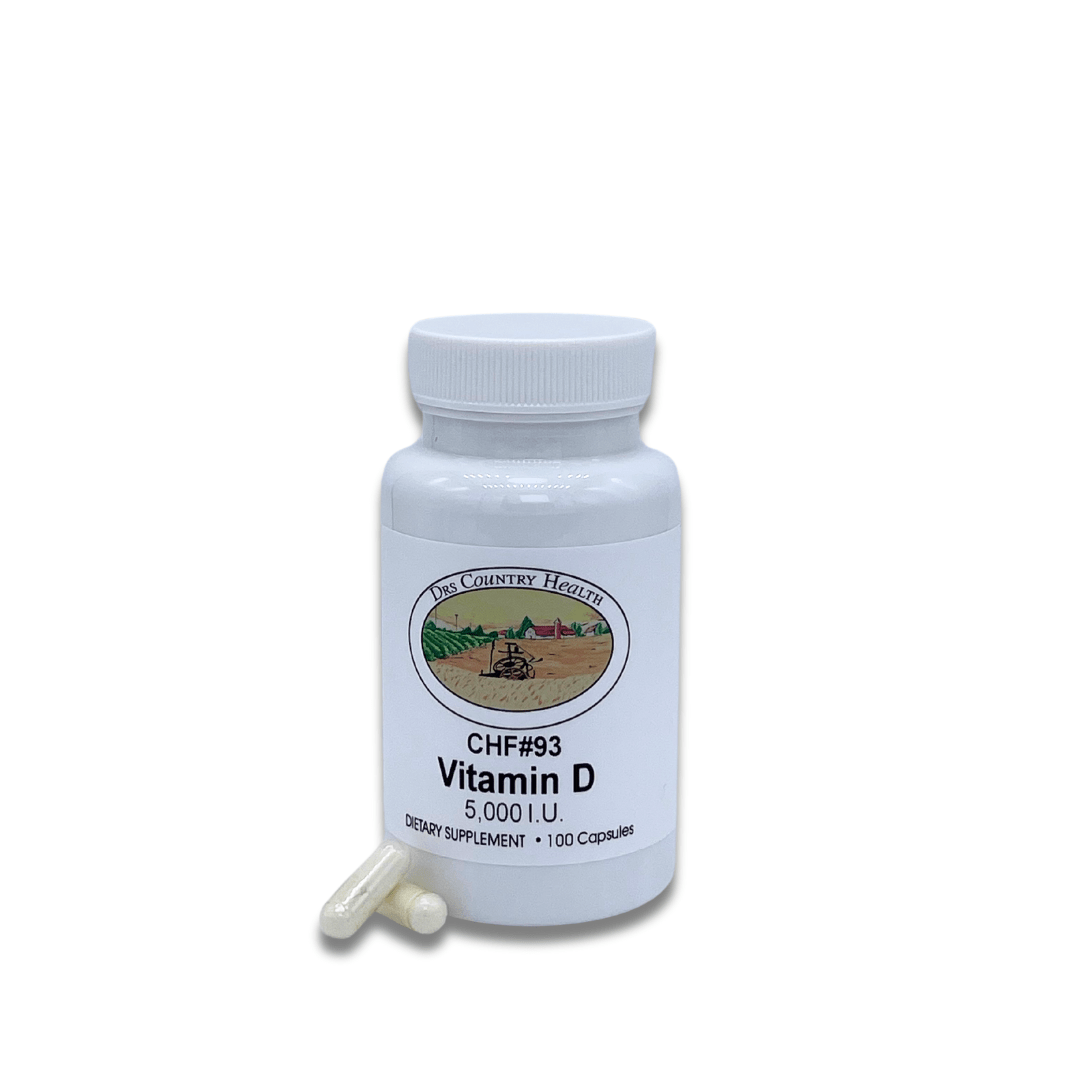
Vitamin D and vitamin K are a natural pair: one helps you absorb calcium, and the other activates proteins that put calcium to work in bone. This article looks at the two active ingredients in CHF #93 Vitamin D 100 Capsules and what research has found about each.
Full ingredient list (per 1 capsule): Vitamin D (as cholecalciferol) 125 mcg (5,000 IU); vitamin K complex (from K2 menaquinone and K1 phylloquinone) 550 mcg. Other ingredients: calcium carbonate, magnesium stearate, microcrystalline cellulose, and a gelatin capsule. The label suggests one capsule daily or as directed by a qualified health professional.
The NIH Office of Dietary Supplements (ODS) explains that vitamin D promotes calcium absorption in the gut and maintains the calcium and phosphate levels needed for normal bone mineralization. It is also needed for bone growth and bone remodeling. Getting enough vitamin D supports normal bone growth in children and bone strength in adults, and together with calcium, vitamin D helps older adults keep their bones strong. ODS also notes that clinical trials have shown vitamin D and calcium supplements may increase bone mineral density in some postmenopausal women and older men.
Cholecalciferol (D3) is the same form your skin makes in sunlight, and ODS reports that D3 raises blood levels of vitamin D more, and keeps them up longer, than D2.
Vitamin D’s role goes well beyond bone. ODS describes its involvement in reducing inflammation and in regulating cell growth, neuromuscular and immune function, and glucose metabolism. Many tissues throughout the body have vitamin D receptors. Vitamin D is also needed for the normal development and growth of muscle fibers, and strong muscles support balance and help protect bones from falls.
Few foods naturally contain much vitamin D. Fatty fish such as salmon, trout, tuna, and mackerel are the best sources, and fortified milk and cereals supply most of the vitamin D in American diets. ODS notes that people with limited sun exposure, darker skin, milk allergy or lactose intolerance, or vegan diets are more likely to run low, which is why many people turn to a supplement.
Vitamin K activates proteins that the body needs for normal blood clotting and for bone. One of them, osteocalcin, is one of the main proteins in bone and may be involved in bone mineralization. Another, matrix Gla protein, is present in blood vessels, bone, and cartilage and is being studied because it might help reduce abnormal calcification. Menaquinones (K2) are found in fermented foods such as natto and cheese and in some animal foods, and gut bacteria make some as well.
ODS reports that some studies link higher vitamin K intakes with higher bone mineral density, and in a 2006 review of 13 trials, 12 found that vitamin K supplementation improved bone mineral density, mostly at higher doses than this capsule provides.
Phylloquinone (K1) is the main form of vitamin K in the diet, found in green leafy vegetables, vegetable oils, and some fruits. Combining K1 with K2 gives CHF #93 both major dietary forms. Together they provide 550 mcg, compared with an Adequate Intake of 90 to 120 mcg a day for adults. ODS notes that no adverse effects from vitamin K in food or supplements have been reported in healthy people, which is why no upper limit has been set.
Vitamin D helps you absorb calcium from food, and vitamin K activates osteocalcin and other proteins that help direct calcium into bone. Pairing them in one capsule is a convenient way to support both steps of the process, and it is a common pairing in bone-support formulas.
Who might enjoy it: adults with limited sun exposure, people who rarely eat fatty fish or fortified foods, those whose clinician has recommended a higher-dose vitamin D product, and anyone who likes the simplicity of D3 and K in a single daily capsule.
A few people should talk with their clinician before starting CHF #93:
Vitamin D helps the body absorb calcium, and vitamin K activates proteins such as osteocalcin that help put calcium to work in bone.
ODS reports that D3 raises blood vitamin D levels more, and keeps them higher longer, than D2.
Each capsule has 125 mcg (5,000 IU). Because that is above the NIH upper limit, ask your clinician before long-term use.
Only with guidance from the clinician who manages your warfarin, because vitamin K affects how warfarin works.
Add CHF #93 Vitamin D to your cart or view the full product page and label.
This article is for general education only. It is not medical advice, and neither this article nor the product it discusses is meant to diagnose, treat, cure, or prevent any disease. Statements about dietary supplements have not been evaluated by the Food and Drug Administration. Talk with your doctor, pharmacist, or another qualified health professional before starting any supplement, especially if you are pregnant or breastfeeding, take prescription or over-the-counter medicines, or have a medical condition.