
By Jenn Resendiz
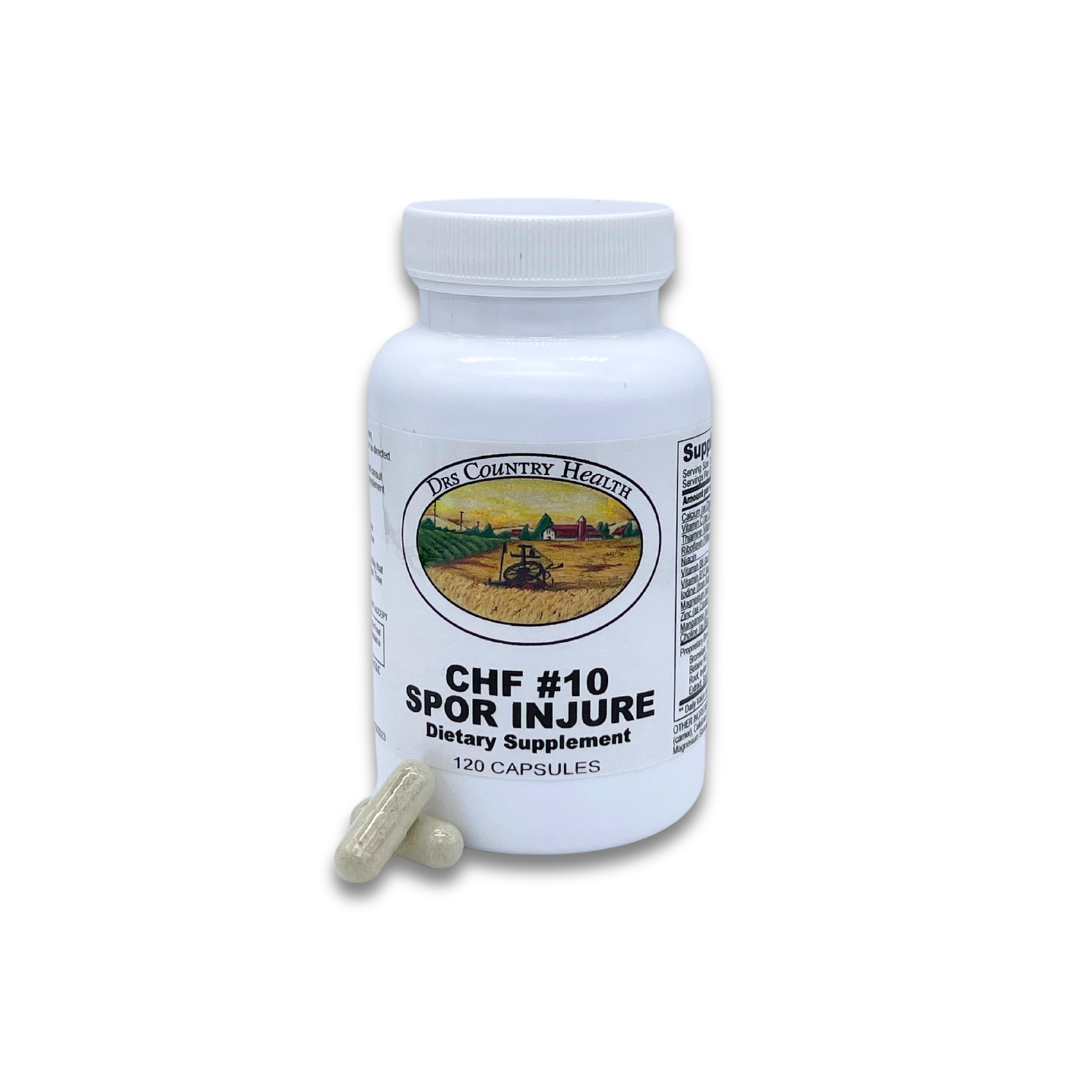
Active recovery days often call for minerals that support muscle and nerve function plus botanicals long used in connective-tissue formulas. This article walks through the featured ingredients in CHF #10 Spor Injure—Country Health’s magnesium, manganese, and bromelain–boswellia–collagen blend—and what NIH ODS and related sources report about these nutrients.
Full ingredient list (per 3 capsules): Calcium (citrate and ascorbate) 67 mg; vitamin C (as calcium ascorbate) 30 mg; thiamine (vitamin B1) 4.2 mg; riboflavin (vitamin B2 as R-5-P) 4.2 mg; niacin 21 mg; vitamin B6 (as P-5-P) 13 mg; vitamin B12 (as methylcobalamin) 8 mcg; iodine (from kelp) 30 mcg; magnesium (as chelate and salicylate) 75 mg; zinc (as citrate) 10 mg; manganese (as chelate and carbonate) 58 mg; choline (as bitartrate) 60 mg; proprietary blend 850 mg: bromelain, chondroitin sulfate, collagen hydrolysate, betaine HCL, passionflower aerial parts, valerian root, Indian frankincense (Boswellia serrata) gum extract, spirulina, trace mineral blend. Other ingredients: microcrystalline cellulose, magnesium stearate, silica, gelatin (capsule). Suggested use: three capsules daily, or as directed. Supplied: 120 capsules.
NIH ODS explains that magnesium is a cofactor in more than 300 enzyme systems that regulate protein synthesis, muscle and nerve function, blood glucose control, and blood pressure. MedlinePlus likewise notes that magnesium helps maintain normal nerve and muscle function, supports a healthy immune system, and helps bones remain strong. CHF #10 provides 75 mg magnesium per three-capsule serving (as chelate and salicylate), giving active adults a labeled mineral dose within a broader sport-recovery formula. Many people in the United States consume less magnesium from food than recommended, so a clinician-guided capsule can help close that everyday gap.
Manganese is an essential trace element and a cofactor for enzymes involved in amino acid, cholesterol, glucose, and carbohydrate metabolism, bone formation, and antioxidant defense through manganese superoxide dismutase. NIH ODS notes manganese’s involvement in bone formation and connective-tissue-related enzyme activity. CHF #10 lists 58 mg manganese per serving—far above the adult Adequate Intake (~1.8–2.3 mg) and the Tolerable Upper Intake Level of 11 mg for adults from food and supplements—so this mineral dose should be used only with clinician awareness (see the clinician section below).
The 850 mg proprietary blend leads with bromelain (a pineapple enzyme traditionally used in comfort formulas), chondroitin sulfate and collagen hydrolysate (structural proteins and glycosaminoglycans used in joint and connective-tissue nutrition), and Boswellia serrata (Indian frankincense) gum extract. Vitamin C in the same serving supports collagen biosynthesis—NIH ODS states that vitamin C is required for collagen formation, an essential component of connective tissue. Passionflower and valerian appear as traditional calming botanicals that some athletes prefer during rest days; NCCIH summarizes oral passionflower’s traditional calming use and notes valerian’s long history for sleep and stress support.
CHF #10 pairs magnesium for muscle and nerve nutrition, manganese for bone and enzyme cofactor support, B vitamins and zinc for everyday metabolic coverage, and an 850 mg blend built around bromelain, collagen hydrolysate, chondroitin, and Boswellia. The three-capsule daily schedule fits adults who want one Country Health bottle focused on sport-season nutritional support.
Who might enjoy it: adults recovering from hard training blocks with clinician guidance, people seeking magnesium plus a connective-tissue botanical blend, and anyone whose provider agrees Spor Injure’s mineral profile fits their plan.
Please check with your clinician first if you:
No. Supplements are not FDA-approved to diagnose, treat, cure, or prevent disease. CHF #10 is a dietary supplement with minerals and a botanical–enzyme blend, not a prescription analgesic.
75 mg magnesium and 58 mg manganese per three capsules, plus vitamin C, B vitamins, zinc, and an 850 mg proprietary blend.
The label suggests three capsules daily, or as directed by a qualified health professional.
NIH ODS sets an adult UL of 11 mg manganese from food and supplements. Discuss this formula with your clinician before regular use so total manganese from diet and other products stays appropriate for you.
Add CHF #10 Spor Injure to your cart or view the full product page and label.
This article is for general education only. It is not medical advice, and neither this article nor the product it discusses is meant to diagnose, treat, cure, or prevent any disease. Statements about dietary supplements have not been evaluated by the Food and Drug Administration. Talk with your doctor, pharmacist, or another qualified health professional before starting any supplement, especially if you are pregnant or breastfeeding, take prescription or over-the-counter medicines, or have a medical condition.