
By Jenn Resendiz
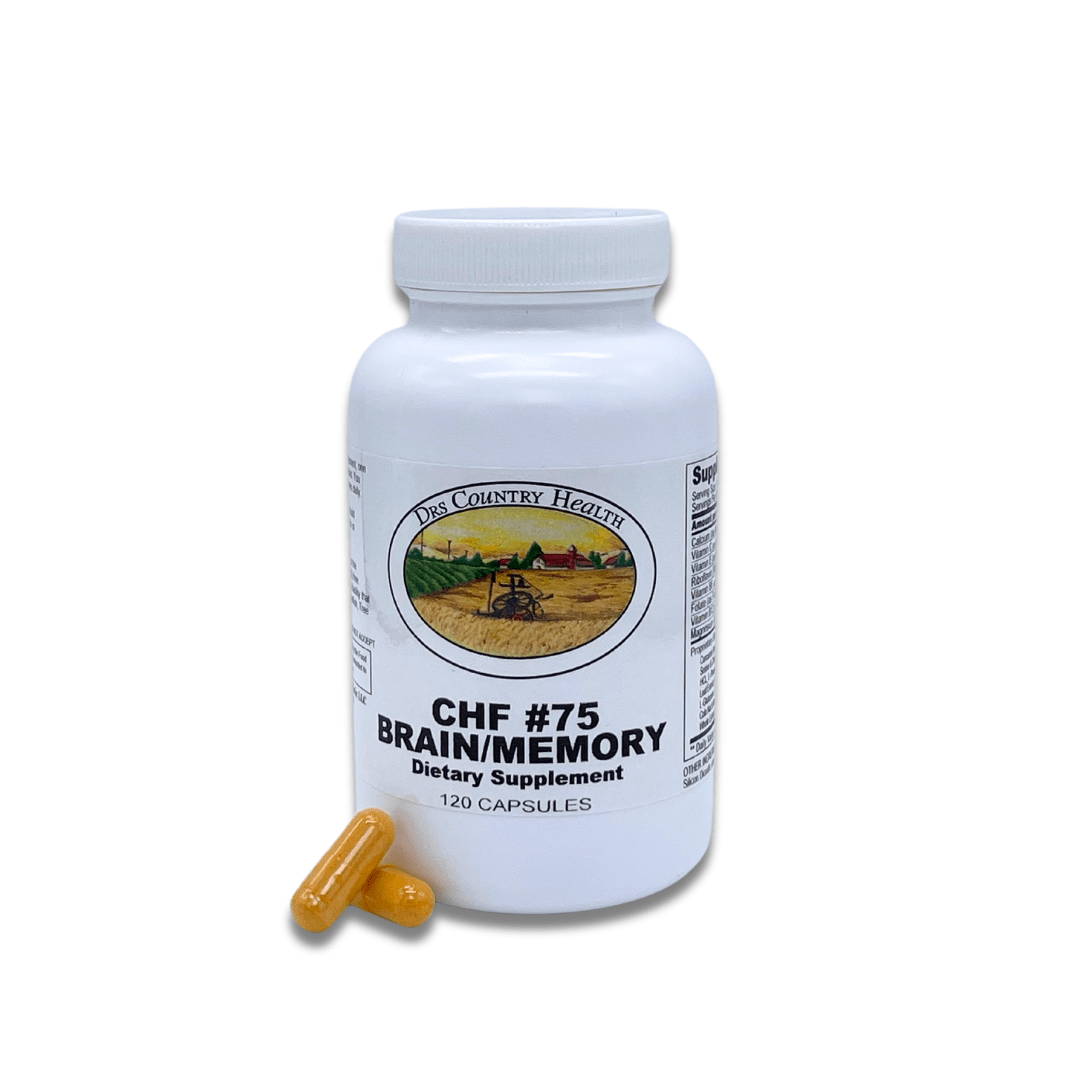
Everyday focus and mental stamina depend on nutrients that support cell membranes, neurotransmitter pathways, and antioxidant defenses. This article walks through the featured ingredients in CHF #75 Brain/Memory 120 Capsules and what research organizations report about them.
Full ingredient list (per 1-capsule serving): Calcium (as ascorbate) 12 mg (1% DV); Vitamin C (as calcium ascorbate) 90 mg (100% DV); Vitamin E (succinate) 20 mg (133% DV); Riboflavin (vitamin B2) 8 mg (615% DV); Vitamin B6 (as pyridoxine HCL) 17 mg (1000% DV); Folate (as folic acid) 6 mcg (2% DV); Vitamin B12 (as methylcobalamin) 675 mcg (28,125% DV); Magnesium (as silicate) 1.6 mg (<1% DV); and a proprietary blend 402 mg of curcumin (from turmeric root extract), phosphatidyl serine & choline complex, L-tyrosine, L-cysteine HCL, L-phenylalanine, rose hips fruit, ginkgo biloba leaf extract, acetyl-L-carnitine HCL, alpha lipoic acid, L-glutamine, grape seed extract, L-pyroglutamic acid, cola nut extract, huperzine A (from toothed clubmoss whole extract), and lithium orotate complex. Other ingredients: gelatin (capsule), cellulose, silicon dioxide, and dicalcium phosphate. The label suggests one capsule two times daily, or as directed; you may take one capsule up to four times daily if needed.
The NIH Office of Dietary Supplements (ODS) explains that vitamin B12 is required for central-nervous-system development and function, healthy red blood cell formation, and DNA synthesis. Methylcobalamin is a metabolically active form. Adult RDAs are about 2.4 mcg; CHF #75 provides 675 mcg as methylcobalamin per capsule—a strong B12 contribution alongside 17 mg vitamin B6 and 8 mg riboflavin, nutrients ODS links to energy metabolism and neurotransmitter pathways.
Vitamin C is needed for collagen, carnitine, and neurotransmitter biosynthesis and acts as a physiological antioxidant, per ODS. Adult RDAs are about 75–90 mg; each capsule supplies 90 mg as calcium ascorbate (100% DV). Vitamin E (alpha-tocopherol) is a fat-soluble antioxidant that helps limit free-radical damage to lipids; ODS notes nuts, seeds, and oils as food sources. CHF #75 includes 20 mg vitamin E succinate (133% DV).
ODS describes choline as an essential nutrient used to make phosphatidylcholine and sphingomyelin for cell membranes and to produce acetylcholine, a neurotransmitter important for memory, mood, and muscle control. Adult Adequate Intakes are about 425–550 mg daily from food and supplements. CHF #75 includes a phosphatidyl serine & choline complex inside the 402 mg proprietary blend.
Carnitine helps transport long-chain fatty acids into mitochondria for energy production, ODS explains. Acetyl-L-carnitine is a common supplemental form; research has explored it for cognitive topics in older adults, with mixed results across systematic reviews. In this formula it sits with amino acids (L-tyrosine, L-cysteine, L-phenylalanine, L-glutamine) and alpha lipoic acid as supportive companions to the vitamin base.
NCCIH notes that curcumin, a major component of turmeric, has been studied for osteoarthritis comfort and other uses; initial evidence for oral curcumin and knee comfort is positive, though higher-quality trials are still needed. Ginkgo leaf extract has been widely studied for cognitive and circulatory topics; NCCIH reports that evidence for preventing dementia or clearly enhancing cognition in healthy people is not conclusive, yet ginkgo remains one of the most researched botanicals in this category. Grape seed extract supplies proanthocyanidins; NCCIH reviews suggest possible modest benefits for certain cholesterol and blood-pressure markers in small trials.
CHF #75 also lists rose hips, cola nut extract, huperzine A from clubmoss, and a lithium orotate complex within the blend. Individual amounts inside the 402 mg proprietary blend are not broken out on the label.
CHF #75 pairs a high-potency B-vitamin and antioxidant vitamin base with a multi-ingredient cognitive-support blend led by curcumin, phosphatidylserine/choline, ginkgo, acetyl-L-carnitine, and grape seed extract. The pattern is a “nutrition-plus-botanicals” approach for adults who want Country Health’s take on everyday mental-focus ingredients in capsule form.
Who might enjoy it: adults seeking a Country Health formula that combines B12, B6, vitamin C, and vitamin E with phosphatidylserine/choline and classic brain-support botanicals, especially when a clinician agrees the mix fits their routine.
Please check with your clinician first if you:
No. Dietary supplements are not meant to diagnose, treat, cure, or prevent disease. NCCIH reports that ginkgo has not been shown to prevent dementia; talk with your clinician about any cognitive concerns.
The label suggests one capsule two times daily, or as directed; you may take one capsule up to four times daily if needed.
No. Ingredients inside the 402 mg blend are listed together; exact milligrams per botanical are not broken out.
Oral B12 absorption is limited at higher doses, ODS notes, so supplemental products often use amounts well above the RDA. Discuss total B12 intake with your clinician if you use multiple products.
Add CHF #75 Brain/Memory to your cart or view the full product page and label.
This article is for general education only. It is not medical advice, and neither this article nor the product it discusses is meant to diagnose, treat, cure, or prevent any disease. Statements about dietary supplements have not been evaluated by the Food and Drug Administration. Talk with your doctor, pharmacist, or another qualified health professional before starting any supplement, especially if you are pregnant or breastfeeding, take prescription or over-the-counter medicines, or have a medical condition.