
By Jenn Resendiz
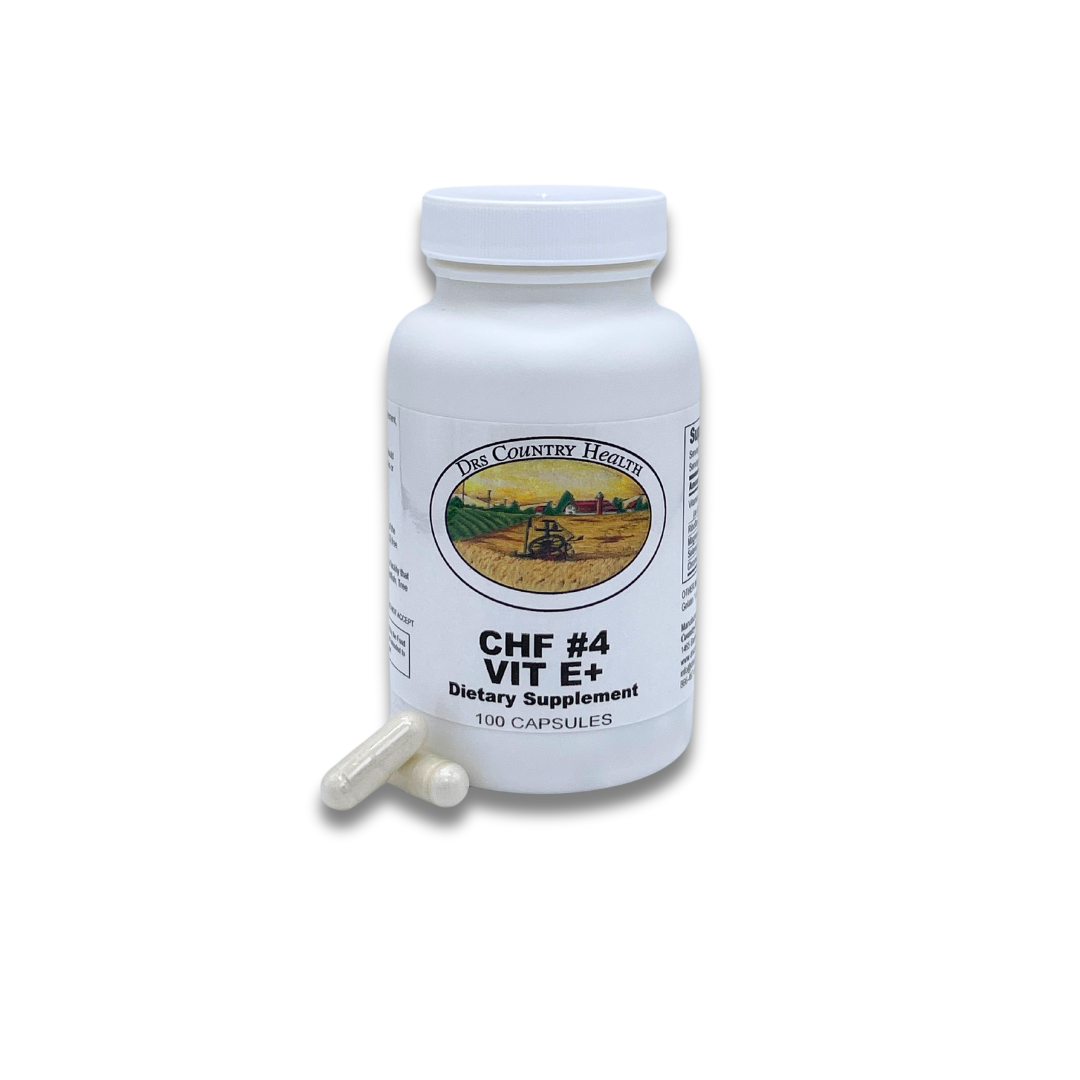
Vitamin E is the body’s classic fat-soluble antioxidant vitamin, and Country Health pairs it with a few supporting micronutrients. This article walks through each ingredient in CHF #4 Vitamin E 100 Capsules and what research has found about it.
Full ingredient list (per serving): Vitamin E (as d-alpha-tocopheryl succinate) 120 mg (800% DV); Riboflavin (as R-5-P) 900 mcg (69% DV); Magnesium (as chelate) 5.8 mg (1% DV); Selenium (as selenomethionine) 2.5 mcg (5% DV); and Chromium (as chelate) 50 mcg (143% DV). Other ingredients: magnesium stearate, microcrystalline cellulose, silica, and a gelatin capsule. The label suggests one capsule daily or as directed.
According to the NIH Office of Dietary Supplements, vitamin E is a fat-soluble antioxidant that helps stop the chain reaction of free radicals formed when fats oxidize. Alpha-tocopherol is the form that meets human requirements. ODS also notes roles in immune function and cell signaling. Nuts, seeds, and vegetable oils such as sunflower, safflower, and wheat germ oil are among the best food sources.
Adults need 15 mg of alpha-tocopherol a day. CHF #4 provides 120 mg of vitamin E as d-alpha-tocopheryl succinate—the natural stereoisomer labeled “d-alpha”—in an ester form that the body can absorb after hydrolysis. That serving is well above the RDA and still under the adult upper limit of 1,000 mg of supplemental alpha-tocopherol.
Selenium is an essential mineral that becomes part of selenoproteins, including glutathione peroxidases that help protect cells from oxidative damage, ODS explains. Seafood, meat, poultry, eggs, and Brazil nuts are notable food sources. The adult RDA is 55 mcg. CHF #4 includes 2.5 mcg of selenium as selenomethionine—a small complementary amount that sits naturally beside vitamin E in many antioxidant-minded formulas.
Riboflavin is a B vitamin that helps enzymes turn food into cellular energy and supports antioxidant recycling pathways. ODS lists dairy, eggs, lean meats, and fortified grains as common sources. Adults need 1.1–1.3 mg daily. CHF #4 supplies 900 mcg (0.9 mg) as riboflavin-5-phosphate (R-5-P), an active phosphate form.
Chromium is a trace mineral that contributes to normal insulin action and carbohydrate, fat, and protein metabolism. The formula provides 50 mcg as a chelate (143% DV), plus a small 5.8 mg of chelated magnesium.
CHF #4 centers on a robust natural-form vitamin E dose and surrounds it with selenium, riboflavin, chromium, and a touch of magnesium. The pattern reads like an antioxidant-forward daily capsule rather than vitamin E alone.
Who might enjoy it: adults who want a dedicated vitamin E capsule, people whose diets are light on nuts and seed oils, and anyone who prefers d-alpha-tocopheryl succinate with mineral companions in one Country Health soft-style capsule routine.
Please check with your clinician first if you:
120 mg of vitamin E as d-alpha-tocopheryl succinate per serving (800% DV), plus riboflavin, selenium, magnesium, and chromium.
It is above the 15 mg adult RDA and below the 1,000 mg adult upper limit for supplemental alpha-tocopherol. Follow the label and your clinician’s advice.
Vitamin E is fat-soluble, so many people take it with a meal that contains some fat.
d-alpha-tocopheryl succinate, a natural-stereoisomer ester form commonly used in supplements.
Add CHF #4 Vitamin E to your cart or view the full product page and label.
This article is for general education only. It is not medical advice, and neither this article nor the product it discusses is meant to diagnose, treat, cure, or prevent any disease. Statements about dietary supplements have not been evaluated by the Food and Drug Administration. Talk with your doctor, pharmacist, or another qualified health professional before starting any supplement, especially if you are pregnant or breastfeeding, take prescription or over-the-counter medicines, or have a medical condition.