
By Jenn Resendiz
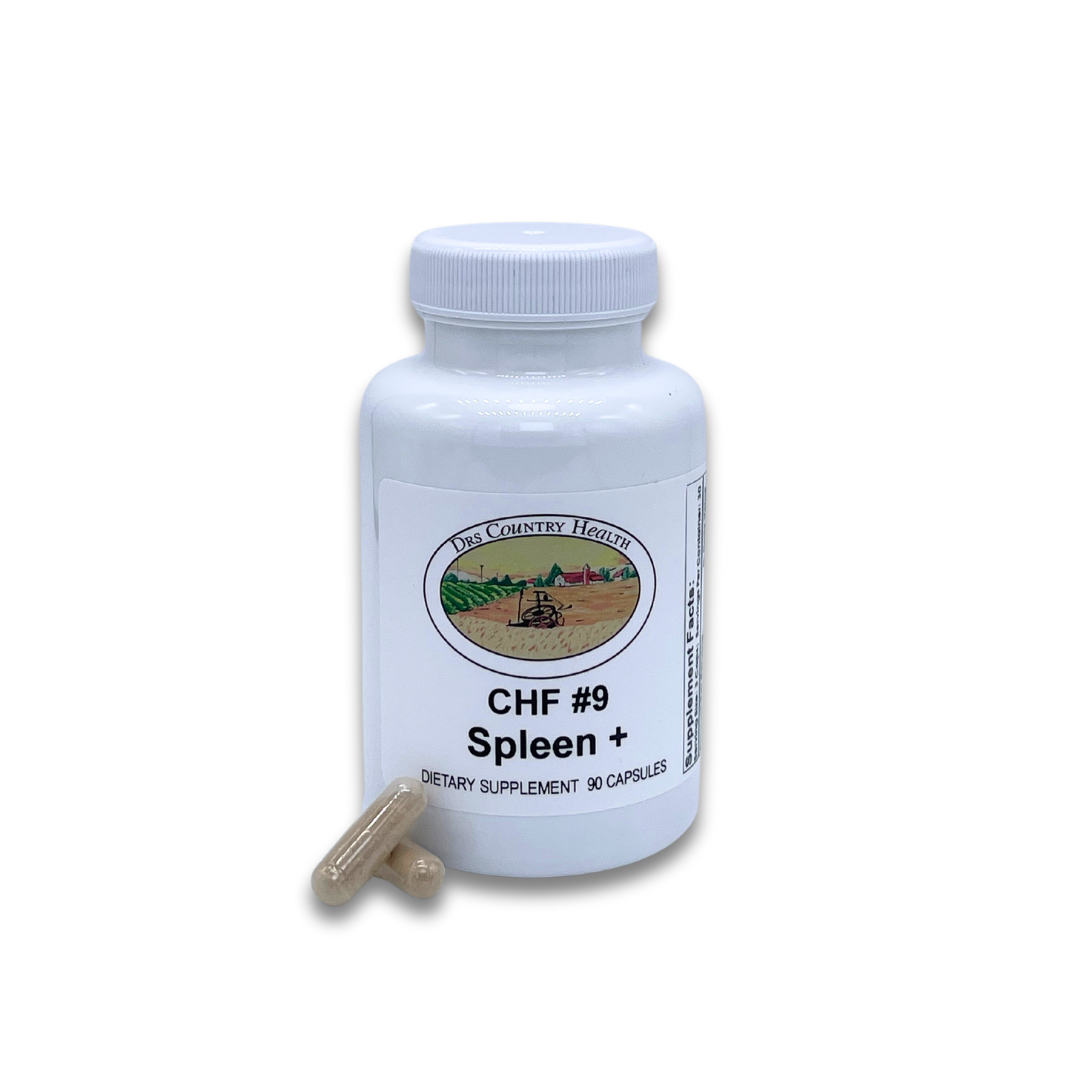
Everyday immune readiness depends on nutrients, botanicals, and the body’s own lymph- and gland-related tissues working in rhythm. This article walks through the featured ingredients in CHF #9 Spleen+ 90 Capsules—Country Health’s multi-nutrient immune formula—and what NIH ODS and NCCIH sources report about several of its standouts.
Full ingredient list (per 3-capsule serving): Vitamin A (as beta carotene) 900 mcg RAE (3000 IU); vitamin C (as calcium ascorbate) 250 mg; calcium (as calcium ascorbate) 25 mg; vitamin E (d-alpha-tocopheryl acetate) 30 mg; thiamine 30 mg; riboflavin (as R-5-P) 3 mg; vitamin B6 (as P-5-P) 5 mg; zinc (amino acid chelate) 15 mg; selenium (amino acid chelate) 30 mcg; copper (copper gluconate) 0.3 mg; thymus (bovine glandular concentrate) 400 mg; spleen (bovine glandular concentrate) 100 mg; pituitary (bovine glandular concentrate) 15 mg; L-lysine 250 mg; pancreatin (porcine) 30 mg; proprietary blend 140 mg of elderberry flower extract, echinacea purpurea whole herb extract, reishi mycelium extract, olive fruit oil, bromelain, cranberry extract, tocotrienols (from palm fruit), and beet root. Other ingredients: magnesium stearate, microcrystalline cellulose, gelatin (capsule). Suggested use: three capsules per day, or as directed.
NIH ODS explains that zinc supports immune function, protein and DNA synthesis, and healthy growth, while vitamin C is a well-known antioxidant nutrient involved in normal immune cell activity. Vitamin A—here as beta carotene providing 900 mcg RAE—supports immune function, vision pathways, and the integrity of epithelial tissues that line the airways and gut. CHF #9 pairs these micronutrients with activated B vitamins (R-5-P and P-5-P) and vitamin E so adults get a broad foundational layer before the botanical and glandular companions.
NCCIH reports that elderberry is promoted for colds and flu and that some preliminary research suggests it may relieve symptoms of upper respiratory infections. Echinacea, also summarized by NCCIH, may slightly reduce the chance of catching a cold when taken as studied extracts. CHF #9 includes both elderberry flower extract and Echinacea purpurea whole herb extract inside its 140 mg proprietary botanical blend—alongside reishi mycelium, cranberry, bromelain, olive fruit oil, beet root, and tocotrienols—for a classic Country Health immune-botanical profile.
Thymus, spleen, and pituitary bovine concentrates appear at labeled amounts (400 mg, 100 mg, and 15 mg), reflecting Country Health’s traditional glandular approach to immune and endocrine nutritional support. L-lysine (250 mg) and pancreatin (30 mg) round out the amino-acid and enzyme side of the serving. These companions sit beside the micronutrient and herb layers rather than replacing a balanced diet.
CHF #9 stacks immune-relevant vitamins and minerals, bovine glandular concentrates, lysine, digestive enzymes, and an elderberry–echinacea–reishi botanical blend in three capsules. The 90-capsule bottle is built for adults seeking Country Health’s multi-ingredient spleen and thymus nutritional support.
Who might enjoy it: adults who want zinc, vitamin C, and beta carotene with elderberry and echinacea companions; people whose clinician agrees a glandular-inclusive immune formula fits their routine; and anyone looking for a single Country Health capsule serving rather than juggling many single-ingredient bottles.
Please check with your clinician first if you:
No. Supplements are not FDA-approved to diagnose, treat, cure, or prevent disease. CHF #9 is a dietary supplement for nutritional immune support.
15 mg zinc and 250 mg vitamin C per three capsules, plus 900 mcg RAE vitamin A as beta carotene.
The label suggests three capsules per day, or as directed by a qualified health professional.
Yes—both appear in the 140 mg proprietary blend with reishi, cranberry, bromelain, olive fruit oil, beet root, and tocotrienols.
Add CHF #9 Spleen+ to your cart or view the full product page and label.
This article is for general education only. It is not medical advice, and neither this article nor the product it discusses is meant to diagnose, treat, cure, or prevent any disease. Statements about dietary supplements have not been evaluated by the Food and Drug Administration. Talk with your doctor, pharmacist, or another qualified health professional before starting any supplement, especially if you are pregnant or breastfeeding, take prescription or over-the-counter medicines, or have a medical condition.